The 2026 Housing Market: Predicting a 7% Shift in Mortgage Rates by June
The real estate landscape is perpetually in motion, a complex tapestry woven from economic threads, demographic shifts, and global events. As we cast our gaze forward to the 2026 housing market, one of the most critical factors influencing affordability and investment potential is the trajectory of mortgage rates. Recent analyses and expert consensus suggest a significant shift on the horizon: a potential 7% movement in mortgage rates by June 2026. This isn’t just a number; it’s a pivotal indicator that could reshape homeownership dreams, investment strategies, and the overall economic stability of countless households. Understanding the forces driving this prediction is paramount for anyone looking to buy, sell, or invest in real estate in the coming years.
Anúncios
The journey to predicting future mortgage rates involves dissecting a myriad of interconnected variables. From inflation and central bank policies to global geopolitical tensions and domestic economic performance, each element plays a role in shaping the cost of borrowing. A 7% shift, whether up or down, represents a substantial change that demands careful consideration. This article will delve deep into the indicators signaling this potential change, explore its implications for various market participants, and offer strategies to navigate what promises to be an interesting and dynamic period for the 2026 housing market.
Understanding the Economic Undercurrents Driving Mortgage Rates
Mortgage rates are not arbitrary figures; they are direct reflections of broader economic conditions. To grasp the potential 7% shift by June 2026, we must first understand the primary economic undercurrents that influence them. The Federal Reserve’s monetary policy, specifically the federal funds rate, stands as a cornerstone. When the Fed raises its benchmark rate to combat inflation, borrowing costs across the economy, including mortgage rates, tend to follow suit. Conversely, a reduction in the federal funds rate usually leads to lower mortgage rates, stimulating economic activity. The challenge lies in predicting the Fed’s actions, which are themselves reactions to economic data.
Anúncios
Inflation, perhaps the most talked-about economic phenomenon of recent years, is another critical determinant. When inflation is high, lenders demand higher interest rates to compensate for the eroding purchasing power of future repayments. The ongoing battle against persistent inflation, coupled with supply chain issues and robust consumer demand, suggests that inflationary pressures might not fully subside by 2026. This sustained inflation could keep upward pressure on mortgage rates, or at least prevent a significant decline, making the 7% shift a possibility.
Beyond the Fed and inflation, the bond market plays an equally vital role. Mortgage rates are closely tied to the yield on the 10-year Treasury bond. When bond yields rise, mortgage rates typically follow. Bond yields are influenced by investor sentiment, economic growth expectations, and global capital flows. A strong economy, for instance, might lead investors to demand higher yields on bonds, anticipating better returns elsewhere, thereby pushing mortgage rates higher. Conversely, economic slowdowns or uncertainties can drive investors to safer government bonds, lowering yields and potentially mortgage rates. Analyzing these complex interdependencies is crucial for forecasting the 2026 housing market.
The Role of Geopolitical Stability and Global Economic Trends
It’s impossible to discuss economic forecasts without acknowledging the pervasive influence of geopolitical events and global economic trends. International conflicts, trade disputes, and the economic performance of major global powers can send ripples through financial markets worldwide, directly impacting bond yields and, consequently, mortgage rates. For example, a sudden global economic slowdown could lead to a flight to safety, driving down bond yields and potentially mortgage rates in the short term, even if domestic conditions suggest otherwise.
Conversely, increased global demand for capital or a resurgence of inflationary pressures on an international scale could push rates higher. The interconnectedness of the modern global economy means that a crisis in one region can quickly become a challenge for markets everywhere. Therefore, any prediction for the 2026 housing market and mortgage rates must factor in a broad understanding of the international economic and political landscape. This adds another layer of complexity to an already intricate forecasting model.
Analyzing the 7% Shift: Upward or Downward?
The phrase ‘7% shift’ is deliberately ambiguous, as the direction of this change is as important as its magnitude. Will mortgage rates climb an additional 7% from current levels, making homeownership significantly more expensive? Or will they drop by 7%, providing much-needed relief to prospective buyers? Both scenarios have vastly different implications for the 2026 housing market.
An upward shift could be driven by persistent inflation, requiring the Federal Reserve to maintain or even increase its hawkish stance. Strong economic growth, coupled with tight labor markets, could also contribute to higher rates as demand for credit remains robust. In this scenario, affordability would likely worsen, potentially cooling down buyer demand and leading to a more balanced or even buyer-favored market in some regions, depending on inventory levels. Existing homeowners with adjustable-rate mortgages (ARMs) could face increased monthly payments, adding financial strain.
Conversely, a downward shift of 7% would likely be precipitated by a significant economic slowdown, a successful taming of inflation, or a combination of both. If the Fed achieves its inflation targets and sees signs of economic contraction, it might be compelled to cut interest rates to stimulate growth. Such a scenario would inject new life into the housing market, making mortgages more affordable and potentially reigniting buyer demand. This could lead to increased home sales and, depending on supply, a rebound in home price appreciation. For homeowners, a drop in rates could open opportunities for refinancing, lowering monthly payments and freeing up disposable income.
Key Economic Indicators to Monitor for the 2026 Housing Market
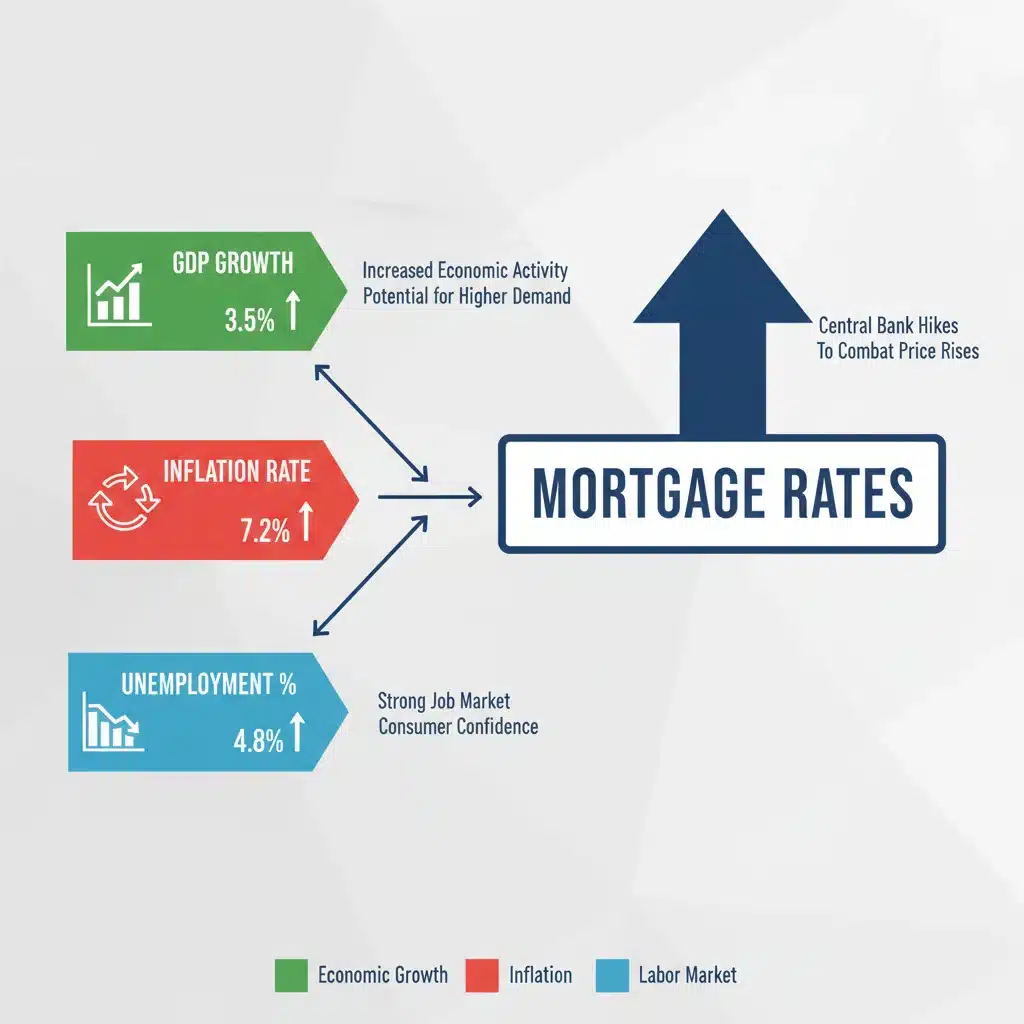
To anticipate the direction of the 7% shift, several key economic indicators will be crucial to monitor:
- Inflation Data (CPI, PCE): The Consumer Price Index (CPI) and Personal Consumption Expenditures (PCE) are the Fed’s preferred gauges of inflation. Consistent declines towards the Fed’s 2% target would signal a greater likelihood of rate cuts.
- Employment Reports (Jobs Growth, Unemployment Rate): A robust job market can fuel inflation and keep rates higher, while rising unemployment could prompt the Fed to ease monetary policy.
- GDP Growth: Strong Gross Domestic Product (GDP) growth indicates a healthy economy, which can support higher rates. A slowdown in GDP might necessitate rate reductions.
- Consumer Spending: A significant component of GDP, strong consumer spending can contribute to inflationary pressures.
- Housing Market Data (Sales, Inventory, Prices): The health of the housing market itself can influence Fed decisions. A severely depressed market might warrant intervention.
- Global Economic Health: As mentioned, international economic performance can influence domestic policy and market sentiment.
By closely tracking these indicators, investors and prospective homeowners can gain a more nuanced understanding of the forces shaping the 2026 housing market and the probable direction of mortgage rates.
Implications for Homebuyers in 2026
The potential 7% shift in mortgage rates by June 2026 carries profound implications for homebuyers. The impact will vary significantly based on whether rates move up or down.
Scenario 1: Mortgage Rates Increase by 7%
If mortgage rates rise significantly, affordability will become an even greater challenge. A 7% increase on a typical mortgage could add hundreds, if not thousands, of dollars to monthly payments. This would effectively price out a segment of potential buyers, especially first-time homebuyers and those in high-cost-of-living areas. Demand could soften considerably, leading to longer market times for properties and potentially even price corrections in some overheated markets. Buyers who are still able to qualify might find themselves with less purchasing power, having to settle for smaller homes or less desirable locations. The emphasis for buyers would shift even more towards careful budgeting, strong credit scores, and potentially larger down payments to mitigate the impact of higher interest.
Scenario 2: Mortgage Rates Decrease by 7%
Conversely, a 7% decrease in mortgage rates would be a boon for homebuyers. It would significantly reduce monthly mortgage payments, making homeownership more accessible and affordable for a wider population. This could unleash pent-up demand, leading to increased competition among buyers and potentially driving up home prices, especially if inventory remains constrained. For those who delayed purchasing due to high rates, this scenario could present a golden opportunity. The market would likely become more competitive, requiring buyers to be prepared with pre-approvals and swift decision-making. Refinancing opportunities would also abound for existing homeowners, allowing them to lock in lower rates and reduce their financial burden.
Regardless of the direction, prospective homebuyers in the 2026 housing market should prioritize financial preparedness. This includes saving for a substantial down payment, improving credit scores, and understanding their budget thoroughly. Consulting with a mortgage professional early on can provide valuable insights into personal affordability and help strategize for different rate environments.
Impact on Homeowners and Real Estate Investors
Existing homeowners and real estate investors will also feel the ripple effects of a 7% mortgage rate shift. Their strategies and financial outlook could be significantly altered.
For Existing Homeowners
If rates increase, homeowners with fixed-rate mortgages will largely be insulated from the direct impact on their monthly payments. However, their property values might see slower appreciation or even slight declines if higher rates depress buyer demand. Those with adjustable-rate mortgages (ARMs) could face substantial increases in their monthly payments, potentially leading to financial stress. For homeowners looking to sell, an increase in rates could mean a smaller pool of buyers and potentially a longer time on the market, possibly requiring price adjustments. The equity in their homes might grow more slowly, impacting their ability to leverage that equity for other financial goals.
If rates decrease, homeowners with fixed-rate mortgages could benefit from increased property values due to renewed buyer demand. More importantly, many would have the opportunity to refinance their existing mortgages at a lower rate, significantly reducing their monthly payments and saving substantial amounts over the life of the loan. This could free up capital for other investments, home improvements, or simply improve their overall financial health. For those considering selling, a lower rate environment could mean a more robust market, quicker sales, and potentially higher selling prices.
For Real Estate Investors
Real estate investors operate with a different set of calculations. An increase in mortgage rates makes financing new acquisitions more expensive, directly impacting their return on investment (ROI). This could lead to a slowdown in investment activity, particularly for properties reliant on significant leverage. Rental yields might need to increase to offset higher borrowing costs, which could be challenging in markets with limited rental growth potential. Investors might shift their focus to cash-flow positive properties, or explore alternative financing methods.
Conversely, a decrease in mortgage rates would be highly favorable for investors. It would reduce borrowing costs, making new acquisitions more attractive and boosting potential ROI. This could stimulate a new wave of investment, particularly in rental properties, as lower rates make it easier to achieve positive cash flow. Investors might also find opportunities to refinance existing portfolios, improving their overall profitability. The 2026 housing market, with a potential 7% shift, will require investors to be agile and adaptable, ready to pivot their strategies based on the prevailing rate environment.

Strategies to Navigate the 2026 Housing Market
Given the potential for a significant 7% shift in mortgage rates by June 2026, proactive planning is essential for all participants in the housing market. Here are some strategies:
For Prospective Homebuyers:
- Save Aggressively for a Down Payment: A larger down payment reduces the amount you need to borrow, mitigating the impact of higher interest rates.
- Improve Your Credit Score: A strong credit score qualifies you for the best possible rates, regardless of market conditions.
- Get Pre-Approved: Understanding your borrowing capacity and locking in a rate (if possible) provides certainty.
- Consider Different Loan Products: Explore various mortgage options, including adjustable-rate mortgages (ARMs) if a downward rate shift is anticipated, or fixed-rate mortgages for stability if rates are expected to rise.
- Be Flexible with Location and Property Type: Expanding your search criteria can open up more affordable options.
- Stay Informed: Continuously monitor economic indicators and expert forecasts for the 2026 housing market.
For Current Homeowners:
- Review Your Mortgage: Understand your current interest rate and whether it’s fixed or adjustable.
- Consider Refinancing: If rates decrease, explore refinancing options to lower your monthly payments. Even a small drop can lead to significant savings over time.
- Build Home Equity: Pay down your principal faster if possible, or make improvements that increase your home’s value.
- Consult a Financial Advisor: Discuss how potential rate changes might impact your overall financial plan.
- Prepare for a Sale (if applicable): If you plan to sell, ensure your home is in top condition to attract buyers in a potentially more competitive market.
For Real Estate Investors:
- Stress Test Your Investments: Model scenarios with both higher and lower interest rates to understand potential impacts on cash flow and ROI.
- Diversify Your Portfolio: Don’t put all your eggs in one basket. Consider different property types and locations.
- Focus on Cash Flow: Prioritize properties that generate strong rental income, especially if borrowing costs increase.
- Explore Creative Financing: Look into seller financing, partnerships, or other non-traditional lending options.
- Monitor Market Trends Closely: Be prepared to adjust your acquisition and disposition strategies based on the evolving rate environment in the 2026 housing market.
- Leverage Technology: Utilize data analytics and market intelligence to identify emerging opportunities or risks.
The Long-Term Outlook Beyond 2026
While our immediate focus is on the 7% shift by June 2026, it’s also important to consider the longer-term outlook for the housing market. Real estate cycles typically span several years, influenced by demographic shifts, technological advancements, and evolving societal preferences. Beyond the immediate impact of interest rates, factors such as population growth, urbanization trends, remote work policies, and sustainable living initiatives will continue to shape demand and supply dynamics.
The role of technology, from AI-driven market analysis to smart home features, will also become increasingly prominent, influencing property values and buyer expectations. The push for energy efficiency and sustainable building practices will likely continue, potentially making green homes more desirable and valuable. Understanding these broader trends provides a more holistic perspective on the future of housing, allowing for more robust long-term planning.
The 2026 housing market will serve as a crucial benchmark, potentially setting the tone for the latter half of the decade. The decisions made by central banks, governments, and individual market participants in response to the predicted mortgage rate shifts will have lasting consequences. Adaptability and informed decision-making will be key to thriving in this evolving environment.
Conclusion: Preparing for a Dynamic 2026 Housing Market
The prediction of a 7% shift in mortgage rates by June 2026 underscores the dynamic and often unpredictable nature of the real estate market. Whether this shift is an upward climb or a welcome descent, its implications for homebuyers, homeowners, and investors will be substantial. The key to navigating this period successfully lies in proactive preparation, continuous monitoring of economic indicators, and a willingness to adapt strategies as new information emerges.
The interplay of inflation, central bank policies, global economic stability, and domestic market conditions will dictate the precise trajectory of rates. By understanding these complex forces, individuals and businesses can better position themselves to capitalize on opportunities and mitigate potential risks within the 2026 housing market. The future of homeownership and real estate investment hinges on informed decisions made today, preparing us for the shifts that lie ahead.
As we move closer to 2026, staying informed through reliable economic reports, expert analyses, and professional financial advice will be more critical than ever. The housing market is a cornerstone of the economy, and its evolution will continue to shape the financial well-being of millions. Be ready, be informed, and be strategic.