Navigating the 2026 Inflation Report: What a 4.2% Rate Means for Your Household Budget
Anúncios
Navigating the 2026 Inflation Report: What a 4.2% Rate Means for Your Household Budget
The economic landscape is a constantly shifting terrain, and staying informed about key indicators is crucial for financial well-being. One such indicator that demands our attention is the latest 2026 inflation report. With a reported annual inflation rate of 4.2%, many households are grappling with what this means for their day-to-day expenses, long-term savings, and overall financial stability. This comprehensive guide will delve into the intricacies of this report, unpack its implications, and provide actionable strategies to help you navigate these economic waters effectively.
Anúncios
Understanding inflation is the first step towards mitigating its effects. Simply put, inflation is the rate at which the general level of prices for goods and services is rising, and subsequently, the purchasing power of currency is falling. A 4.2% inflation rate means that, on average, what cost $100 last year now costs $104.20. While this might seem like a small percentage, its cumulative effect over time can significantly erode your purchasing power and impact your household budget.
Decoding the 2026 Inflation Report: Key Factors at Play
The 2026 inflation report isn’t just a number; it’s a reflection of various underlying economic forces. Several factors could contribute to a 4.2% inflation rate, and understanding these can provide valuable context for your financial planning.
Anúncios
Global Supply Chain Dynamics
Even in 2026, global supply chains continue to play a pivotal role in price stability. Disruptions due to geopolitical events, natural disasters, or shifts in manufacturing capabilities can lead to shortages of goods, driving up prices. If the 2026 inflation report highlights persistent supply chain issues, it suggests that the cost of importing raw materials and finished goods is increasing, which businesses then pass on to consumers.
Energy Prices and Their Ripple Effect
Energy costs are a fundamental component of almost every product and service. Fluctuations in oil, natural gas, and electricity prices directly impact transportation costs, manufacturing expenses, and utility bills. A significant surge in energy prices preceding the 2026 inflation report would undoubtedly contribute to the overall inflation rate, affecting everything from your commute to the cost of your groceries.
Labor Market Conditions
A tight labor market, characterized by low unemployment and high demand for workers, often leads to wage increases. While beneficial for employees, these higher labor costs can also contribute to inflation as businesses adjust their prices to maintain profit margins. The 2026 inflation report might reflect a robust labor market where rising wages are a significant inflationary pressure.
Government Fiscal and Monetary Policies
Government spending and central bank monetary policies (like interest rate adjustments) have a profound impact on inflation. Expansionary fiscal policies (increased government spending or tax cuts) can stimulate demand, potentially leading to higher prices. Similarly, loose monetary policies (low interest rates, quantitative easing) can increase the money supply, also contributing to inflationary pressures. Analyzing the policy decisions leading up to the 2026 inflation report is crucial for a complete picture.
How a 4.2% Inflation Rate Impacts Your Household Budget
The 4.2% inflation rate reported in 2026 isn’t an abstract concept; it translates directly into real-world changes for your household budget. Let’s break down how different aspects of your spending might be affected.
Rising Cost of Everyday Necessities
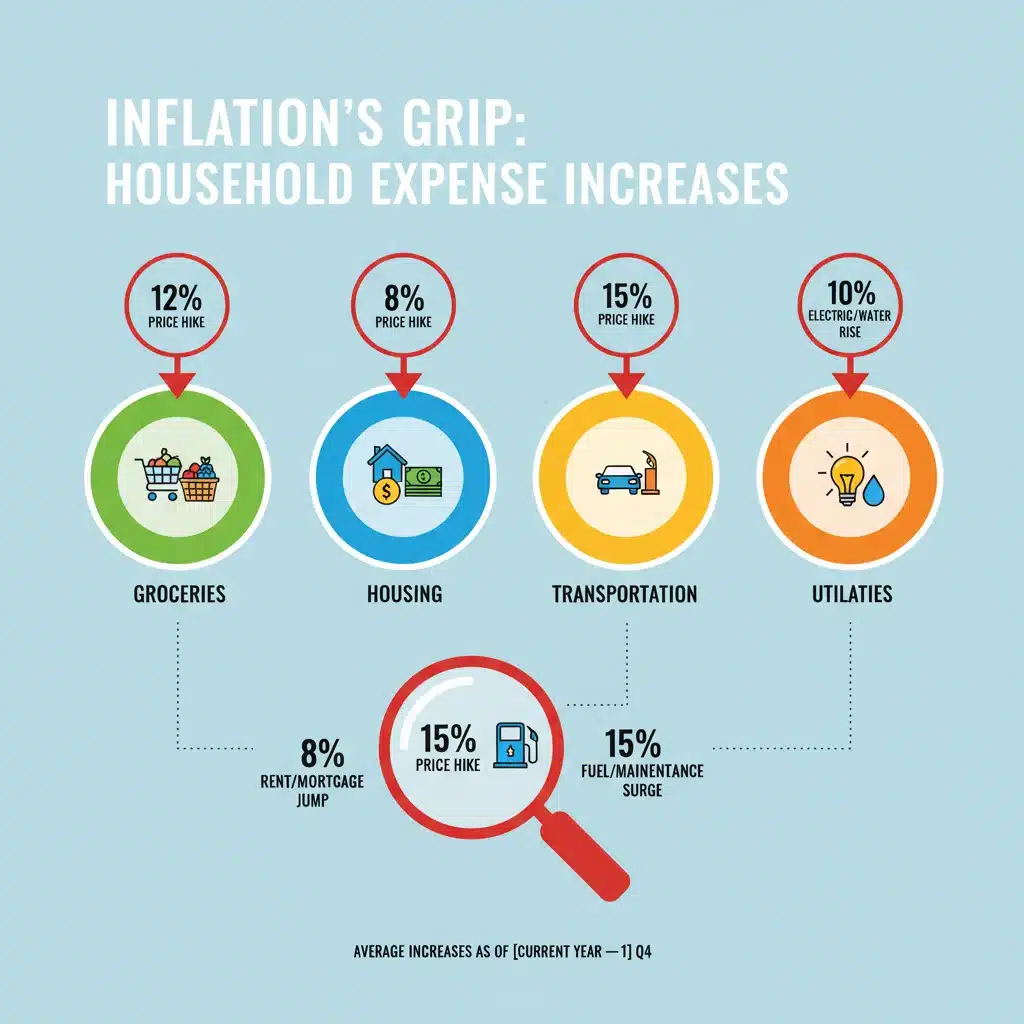
The most immediate and noticeable impact of inflation is on the cost of essential goods and services. Groceries, household supplies, and personal care items will likely see price increases. This means your weekly or monthly grocery bill will be higher for the same basket of goods, forcing you to either spend more or adjust your purchasing habits.
Housing Expenses: Rent and Mortgages
Housing costs are a significant portion of most household budgets. For renters, inflation can lead to higher rent increases as landlords face their own rising costs. For homeowners with variable-rate mortgages, rising interest rates (often a tool to combat inflation) can lead to higher monthly payments. Even fixed-rate mortgage holders will experience increased property taxes and insurance premiums, which are also subject to inflationary pressures.
Transportation Costs
Fuel prices are highly susceptible to inflation, and a 4.2% rate will likely mean higher costs at the pump. Beyond fuel, the cost of vehicle maintenance, public transportation fares, and even purchasing new or used vehicles can increase, adding another layer of expense to your budget. The 2026 inflation report will reflect these increases, making it crucial to re-evaluate your transportation habits.
Utilities and Services
Electricity, gas, water, and internet services are not immune to inflation. Utility providers face higher operational costs, which they pass on to consumers. Expect to see increases in your monthly utility bills, making energy conservation and efficient usage even more important.
Impact on Savings and Investments
Inflation erodes the purchasing power of money over time. If your savings are earning an interest rate lower than 4.2%, your money is effectively losing value. For instance, if your savings account yields 1.0%, your real return after inflation is -3.2%. This underscores the importance of strategic investing to ensure your money grows at a rate that at least keeps pace with, if not surpasses, inflation. The 2026 inflation report serves as a critical reminder to review your investment portfolio.
Strategies to Protect Your Household Budget from Inflation
While a 4.2% inflation rate can be concerning, there are proactive steps you can take to safeguard your household budget and maintain your financial stability. These strategies involve a combination of careful planning, smart spending, and strategic investing.
1. Re-evaluate and Adjust Your Budget
The first and most crucial step is to revisit your current budget. Analyze your income and expenses to identify areas where you can cut back. Look for non-essential spending that can be reduced or eliminated. This might include dining out less frequently, canceling unused subscriptions, or finding cheaper alternatives for entertainment. A detailed review of your budget in light of the 2026 inflation report will highlight where adjustments are most needed.
2. Seek Opportunities for Increased Income
To counteract the rising cost of living, consider ways to increase your income. This could involve asking for a raise at work, taking on a side hustle, or exploring opportunities for passive income. Even a small increase in income can significantly offset the impact of inflation on your household budget.
3. Smart Shopping and Frugal Living
Embrace smart shopping habits. Compare prices, buy in bulk when it makes financial sense, look for sales and discounts, and consider generic brands. Meal planning can also help reduce food waste and impulsive purchases. Focusing on needs over wants is paramount during inflationary periods. The lessons from the 2026 inflation report compel us to be more mindful consumers.
4. Reduce Debt and Avoid New Borrowing
High-interest debt, especially credit card debt, becomes even more burdensome during periods of inflation and rising interest rates. Prioritize paying down existing debt to free up cash flow and reduce interest payments. Avoid taking on new unnecessary debt, as the cost of borrowing will likely be higher.
5. Optimize Your Savings and Investments
As mentioned, traditional savings accounts might not keep pace with a 4.2% inflation rate. Explore investment options that offer better returns. This could include:
- Inflation-Protected Securities (e.g., TIPS): These government bonds are designed to protect investors from inflation by adjusting their principal value based on changes in the Consumer Price Index (CPI).
- Stocks: Historically, equities have outperformed inflation over the long term. Focus on companies with strong pricing power that can pass on increased costs to consumers without significantly impacting demand.
- Real Estate: While subject to market fluctuations, real estate can serve as a hedge against inflation, as property values and rental income tend to rise with inflation.
- Commodities: Gold, silver, and other commodities can also be inflation hedges, though they can be volatile.
Consult with a financial advisor to tailor an investment strategy that aligns with your risk tolerance and financial goals, keeping the implications of the 2026 inflation report in mind.

6. Review Insurance Policies
Inflation can also affect the adequacy of your insurance coverage. The cost to replace your home or car, or the medical expenses for an illness, may have increased. Review your home, auto, health, and life insurance policies to ensure they still provide sufficient coverage in an inflationary environment. This proactive step can prevent significant financial strain down the line.
7. Energy Efficiency Upgrades
Investing in energy-efficient appliances, improving home insulation, or even installing solar panels can lead to significant long-term savings on utility bills, directly combating one of the major areas affected by inflation. While initial costs may be high, the return on investment can be substantial over time, especially with the insights gleaned from the 2026 inflation report.
Long-Term Outlook and Future Preparedness
The 2026 inflation report is a snapshot of the current economic climate, but economic conditions are dynamic. It’s essential to maintain a long-term perspective and build financial resilience. This involves continuous monitoring of economic indicators, adapting your financial plan as needed, and educating yourself on personal finance.
Diversification is Key
In an unpredictable economic environment, diversification across various asset classes is more important than ever. Don’t put all your eggs in one basket. A diversified portfolio can help weather market volatility and protect your wealth from the adverse effects of inflation.
Emergency Fund Reinforcement
An adequately funded emergency fund (typically 3-6 months of living expenses) is your first line of defense against unexpected financial shocks. In an inflationary environment, the amount needed for your emergency fund might increase as living costs rise. Regularly review and adjust your emergency fund to ensure it remains sufficient.
Continuous Learning and Adaptation
The world of finance is constantly evolving. Stay informed about economic trends, financial news, and new investment opportunities. The more you understand, the better equipped you will be to make informed decisions and adapt your strategies to protect your household budget from future inflationary pressures, as indicated by the 2026 inflation report and subsequent updates.
Conclusion: Proactive Steps for Financial Resilience
The 2026 inflation report, with its 4.2% rate, presents both challenges and opportunities. While rising costs can be daunting, a proactive and strategic approach to managing your household budget can help you not only survive but thrive in this economic climate. By re-evaluating your budget, seeking income-generating opportunities, adopting smart spending habits, reducing debt, and optimizing your investments, you can build a stronger, more resilient financial future.
Remember, financial planning is an ongoing process. Regularly review your financial situation, make necessary adjustments, and stay informed about economic trends. Taking these steps will empower you to navigate the complexities of inflation and ensure your household budget remains robust against future economic shifts.