3-Month Blueprint: US Tech Certifications for 2025 Jobs

Anúncios
Accelerating your certification for high-demand US tech jobs in 2025 requires a strategic 3-month tech certification blueprint, focusing on practical skills and targeted learning paths to maximize career opportunities.
Anúncios
Are you looking to break into the booming US tech industry or advance your current career by 2025? The thought of acquiring new certifications can seem daunting, but what if you could fast-track your progress? This article provides a comprehensive 3-month tech certification blueprint, designed to equip you with the essential skills and credentials for high-demand roles, offering practical, time-sensitive solutions for ambitious professionals.
Understanding the 2025 US Tech Landscape
The US tech landscape is continuously evolving, driven by rapid innovation and a constant demand for specialized skills. As we approach 2025, certain areas are experiencing exponential growth, creating significant opportunities for those with the right certifications. Understanding these trends is the first step in formulating an effective career acceleration strategy.
Anúncios
Key Growth Areas in Tech
Several domains are projected to dominate the tech job market in the coming years. Identifying these areas allows you to focus your efforts on certifications that offer the highest return on investment in terms of career prospects and earning potential. This foresight ensures your 3-month blueprint is aligned with future industry needs.
- Cloud Computing: AWS, Azure, and Google Cloud platforms continue to be central to enterprise IT strategies.
- Cybersecurity: With increasing digital threats, roles in security analysis, ethical hacking, and incident response are critical.
- Data Science & AI/ML: The ability to analyze data and develop intelligent systems is highly sought after across all sectors.
- DevOps & Site Reliability Engineering (SRE): Bridging development and operations is crucial for efficient software delivery.
Demand for Certified Professionals
Employers increasingly prefer candidates with verifiable certifications. These credentials demonstrate not only theoretical knowledge but also a practical understanding of specific technologies and methodologies. This makes a structured 3-month tech certification plan particularly appealing, as it offers a clear path to gaining these coveted qualifications quickly and efficiently.
The tech industry values proactive learning and skill adaptation. By committing to a focused certification path, you signal your dedication to continuous professional development, a trait highly valued by leading tech companies. This commitment can significantly enhance your marketability and open doors to diverse opportunities.
In essence, staying ahead in the US tech market means not just acquiring skills, but also validating them through recognized certifications. This foundational understanding sets the stage for tailoring your 3-month blueprint to maximum effect, ensuring you target the most impactful areas for career growth in 2025.
Selecting the Right Certifications for Rapid Impact
Choosing the appropriate certification is paramount for a successful 3-month acceleration plan. With numerous options available, focusing on certifications that are highly recognized, directly applicable to in-demand roles, and achievable within a compressed timeframe is crucial. This strategic selection ensures your efforts yield tangible career benefits quickly.
High-Value, Short-Term Certifications
Certain certifications are designed to be intensive yet achievable within a few months, making them ideal for a rapid career pivot or skill upgrade. These often cover foundational or specialized areas that are critical for entry-level or mid-level positions in the fastest-growing tech sectors. The goal is to identify those that offer significant impact without requiring extensive prior experience.
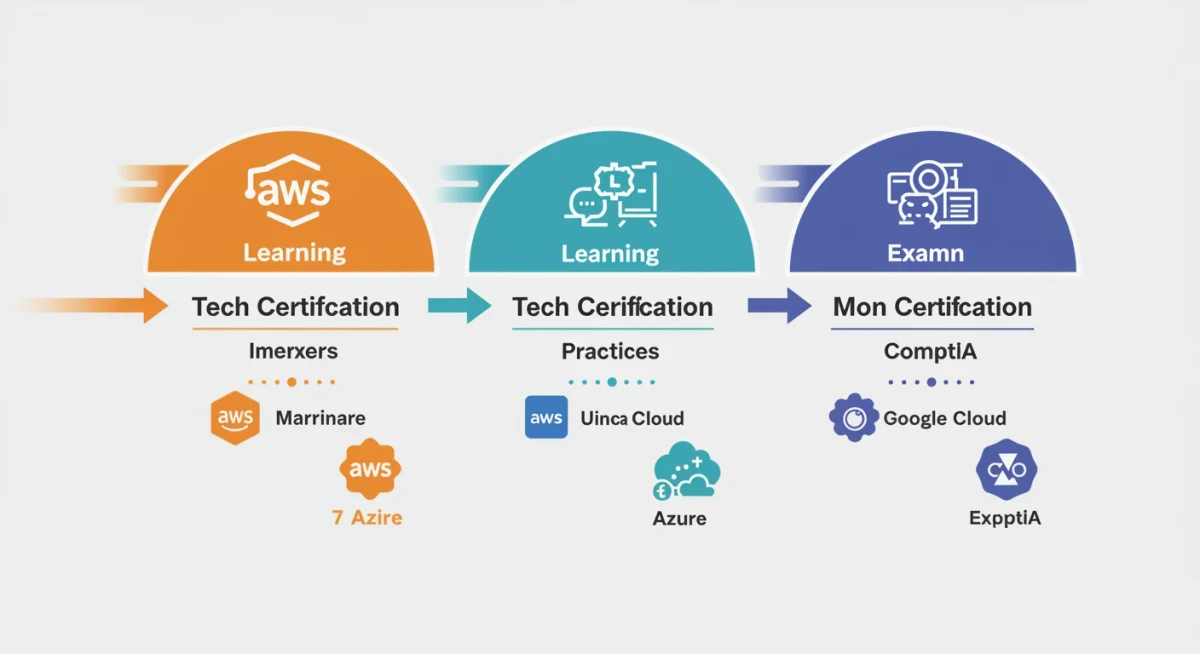
- CompTIA A+, Network+, Security+: Excellent for building a strong IT infrastructure and cybersecurity foundation.
- AWS Certified Cloud Practitioner/Solutions Architect Associate: Entry points into the vast world of cloud computing, highly valued by employers.
- Microsoft Certified: Azure Fundamentals/Administrator Associate: Similar to AWS, these validate essential Azure cloud skills.
- Google Associate Cloud Engineer: A strong credential for those seeking roles in Google Cloud environments.
Aligning Certifications with Career Goals
Beyond general demand, it’s essential to align your chosen certification with your specific career aspirations. Do you envision yourself as a cloud architect, a cybersecurity analyst, or a data engineer? Each path has its own set of recommended certifications. Researching job descriptions for your desired roles in 2025 can provide invaluable insights into the most relevant credentials. This targeted approach ensures that your 3-month tech certification effort directly supports your long-term professional objectives.
Consider your existing skill set and experience. Building upon what you already know can make the learning process more efficient and increase your chances of successfully completing the certification within the tight 3-month window. Don’t be afraid to leverage online communities and professional networks to gather advice on which certifications are most impactful for your specific niche.
Ultimately, the selection process should be a balance between market demand, personal interest, and the feasibility of completion within your ambitious timeline. By making informed choices, you lay a solid groundwork for a truly impactful 3-month certification journey.
Crafting Your 3-Month Study Plan: Week by Week
A well-structured study plan is the backbone of any successful rapid certification effort. For a 3-month tech certification blueprint, meticulous planning, week-by-week breakdown, and consistent execution are non-negotiable. This section outlines how to create an effective schedule that maximizes learning and retention within your tight timeframe.
Month 1: Foundation and Core Concepts
The initial month should be dedicated to building a strong foundation. This involves understanding the core concepts of your chosen certification, familiarizing yourself with the exam objectives, and setting up your learning environment. Prioritize active learning over passive consumption of material.
- Week 1-2: Dive into official exam guides and syllabi. Identify key domains and topics. Begin with introductory courses or books, focusing on fundamental theories and terminologies.
- Week 3-4: Start hands-on labs or practical exercises. Many certifications emphasize practical application, so early exposure to tools and environments is critical. Join study groups or online forums to clarify doubts.
Month 2: Deep Dive and Practical Application
Month two is where you deepen your understanding and apply theoretical knowledge to practical scenarios. This phase requires more intensive study and problem-solving, pushing you beyond basic comprehension to true mastery. Regular self-assessment becomes increasingly important.
Focus on advanced topics within each domain. Work through case studies and complex problem sets. If your certification involves coding or scripting, dedicate significant time to writing and debugging code. Actively seek out challenging exercises that mimic real-world scenarios you might encounter in a tech job. This ensures your learning is not just academic but also highly practical.
Month 3: Review, Practice Tests, and Exam Preparation
The final month is all about consolidation and exam readiness. This is where you fine-tune your knowledge, identify weak areas, and build confidence through rigorous practice. Time management during the actual exam will also be a key focus.
- Week 9-10: Comprehensive review of all topics. Revisit challenging concepts. Take your first full-length practice exam under timed conditions to simulate the actual test environment. Analyze your results thoroughly.
- Week 11-12: Focus on weak areas identified from practice tests. Take multiple practice exams, aiming to improve your score and time management with each attempt. Understand the exam format, question types, and scoring mechanisms.
By breaking down your 3-month tech certification journey into manageable weekly goals, you create a clear roadmap to success. This structured approach helps maintain motivation, track progress, and ensures you cover all necessary material effectively within the tight deadline.
Leveraging Resources for Accelerated Learning
To successfully complete a 3-month tech certification, efficient and effective resource utilization is key. The vast array of learning materials available can be overwhelming, so knowing which resources to prioritize and how to integrate them into your study plan is crucial for accelerated learning.
Official Documentation and Study Guides
Always start with the official sources. Certification bodies provide detailed exam objectives, study guides, and sometimes even recommended courses. These are the most accurate and reliable resources for understanding what will be covered on the exam. Ignoring them can lead to misdirected study efforts.
Official documentation, such as cloud provider manuals or software specifications, offers the deepest dive into technical details. While dense, mastering these documents will set you apart. Supplementing these with well-regarded third-party study guides can offer alternative explanations and practice questions, reinforcing your understanding of complex topics.
Online Courses and Labs
Platforms like Coursera, Udemy, Pluralsight, and A Cloud Guru offer structured courses tailored to specific certifications. These often include video lectures, quizzes, and, most importantly, hands-on labs. Practical experience is invaluable in tech certifications and can significantly boost your confidence and comprehension.
Participating in virtual labs allows you to apply theoretical knowledge in a real or simulated environment, which is critical for retaining information and understanding operational workflows. Many certifications require a practical understanding, and these labs are often the closest you can get to real-world experience without working in the field. Prioritize courses that emphasize hands-on exercises and provide access to sandbox environments.
Community and Peer Learning
Don’t underestimate the power of community. Joining online forums, Reddit communities specific to your certification, or local study groups can provide immense support. You can ask questions, share insights, and learn from the experiences of others who are either studying for the same exam or have already passed it.
Peer learning can introduce you to different perspectives and problem-solving approaches. Explaining concepts to others or debating solutions can solidify your own understanding. These interactions also provide a sense of accountability and motivation, which is particularly helpful when working towards an ambitious 3-month tech certification goal. Engaging with a community helps you stay updated on exam changes and best practices, ensuring your study plan remains relevant.
By strategically combining official materials, interactive online platforms, and peer support, you create a robust learning ecosystem that maximizes your chances of success within the accelerated 3-month timeline.
Overcoming Challenges and Staying Motivated
Embarking on an intensive 3-month tech certification journey is not without its challenges. Maintaining motivation, managing time effectively, and dealing with potential setbacks are crucial for success. Proactive strategies to address these common hurdles will ensure you stay on track and achieve your certification goals.
Time Management and Burnout Prevention
The compressed 3-month timeline demands rigorous time management. It’s easy to fall into the trap of over-studying, which can lead to burnout. Establishing a realistic study schedule that includes breaks, exercise, and adequate sleep is vital. Treat your study time as non-negotiable appointments in your calendar.
- Schedule Breaks: Incorporate short, regular breaks (e.g., 5-10 minutes every hour) and longer breaks (e.g., 30 minutes every few hours).
- Prioritize Sleep: Adequate rest is essential for cognitive function and information retention.
- Exercise Regularly: Physical activity helps reduce stress and improves focus.
- Set Realistic Goals: Break down large study tasks into smaller, achievable daily or weekly goals.
Dealing with Difficult Concepts and Setbacks
You will inevitably encounter topics that are challenging or difficult to grasp. Instead of getting discouraged, view these as opportunities for deeper learning. Don’t hesitate to revisit foundational concepts or seek alternative explanations from different resources or peers. A setback on a practice test is not a failure but a diagnostic tool.
When facing a difficult concept, try explaining it out loud to yourself or to a study partner. This active recall method often highlights gaps in understanding. If a particular area consistently proves challenging, consider dedicating extra time to it or finding supplementary materials that approach the topic from a different angle. Remember, persistence is key in any accelerated learning program.
Maintaining Motivation and Focus
Motivation can wane, especially during a demanding 3-month tech certification period. Regularly remind yourself of your ultimate goal: securing a high-demand US tech job in 2025. Visualize the benefits of achieving your certification, both professionally and personally.
Reward yourself for reaching milestones, no matter how small. This positive reinforcement can significantly boost morale. Connect with mentors or professionals already in your desired field; their insights and encouragement can provide a fresh perspective and renewed drive. Celebrate progress, learn from challenges, and keep your eye on the prize to navigate your accelerated certification journey successfully.
The Certification Exam: Strategy and Execution
The culmination of your 3-month tech certification blueprint is the exam itself. Approaching the exam strategically, from registration to the test day, can significantly impact your success. Proper execution on exam day ensures your hard work translates into a passing score.
Registration and Scheduling
Don’t wait until the last minute to register for your exam. Many certification exams require scheduling in advance, and popular slots can fill up quickly. Choose a date that gives you ample time for final review but also creates a firm deadline to work towards. This sense of urgency can be a powerful motivator.
Consider the best time of day for you to take tests. Are you an early bird or a night owl? Schedule your exam when you are typically most alert and focused. Also, familiarize yourself with the exam center’s rules and requirements, including identification, permitted items, and arrival times, to avoid any last-minute surprises.
Exam Day Preparation and Mindset
The day before the exam, avoid cramming. Instead, do a light review of key concepts and get a good night’s sleep. On exam day, eat a healthy meal, stay hydrated, and arrive early at the test center. A calm and focused mindset is as important as your technical knowledge.
During the exam, read each question carefully. Don’t rush. If you encounter a difficult question, mark it for review and move on. Return to it later if time permits. Often, other questions might provide clues or jog your memory. Manage your time effectively to ensure you answer all questions. Remember, the goal is to pass, not to get a perfect score.
Post-Exam Reflection and Next Steps
Regardless of the outcome, take time to reflect on your experience. If you passed, celebrate your achievement! Begin thinking about how to leverage your new certification in your job search or current role. Update your resume and LinkedIn profile immediately to reflect your new credential.
If the result wasn’t what you hoped for, don’t be discouraged. Analyze the feedback provided (if any) to understand your weak areas. Many certification bodies offer retake policies, allowing you to re-strategize and try again. Use this experience as a learning opportunity to refine your study approach for future certifications. Every attempt builds resilience and deepens your understanding of the material.
Successfully navigating the certification exam is the final hurdle in your 3-month tech certification journey. With careful planning and a strategic approach, you can confidently tackle the test and unlock new career opportunities in the US tech market.
Integrating Your Certification into Your Job Search
Earning a 3-month tech certification is a significant accomplishment, but its true value lies in how effectively you integrate it into your job search strategy. This involves updating your professional profile, tailoring your applications, and networking to maximize your visibility to potential employers in the high-demand US tech market.
Updating Your Professional Profile
Immediately after passing your certification exam, update your resume, LinkedIn profile, and any other professional portfolios. Explicitly state the full name of the certification, the issuing body, and the date obtained. This makes it easy for recruiters and hiring managers to quickly identify your new skills.
Beyond simply listing the certification, elaborate on the specific skills and knowledge you gained. For example, instead of just ‘AWS Certified Cloud Practitioner,’ you might add ‘Proficient in core AWS services, cloud architecture best practices, and security fundamentals.’ Use relevant keywords from job descriptions to ensure your profile is optimized for applicant tracking systems (ATS).
Tailoring Your Applications
When applying for jobs, customize your resume and cover letter to highlight how your new certification directly addresses the requirements of the role. Don’t just send a generic application. Research the company and the specific job, then draw clear connections between your certification-acquired skills and their needs.
In your cover letter, articulate how your 3-month intensive study and rapid certification demonstrate your commitment, adaptability, and ability to quickly acquire new skills – qualities highly valued in the fast-paced tech industry. Provide examples of how the practical skills learned during your certification journey can be applied to solve real-world problems relevant to the position.
Networking and Interview Preparation
Leverage your new certification in your networking efforts. Connect with professionals in your target roles or companies on LinkedIn. Mention your recent certification and express your interest in learning more about their work or opportunities. Attend virtual or in-person tech meetups and conferences to expand your network.
During interviews, be prepared to discuss your certification in detail. Explain why you chose that particular certification, what you learned, and how you applied those learnings in labs or projects. Be ready to answer scenario-based questions that test your practical understanding of the certified technologies. Your ability to articulate your knowledge and demonstrate enthusiasm will make a lasting impression on hiring managers.
Effectively integrating your hard-earned 3-month tech certification into your job search strategy transforms it from a piece of paper into a powerful tool for career advancement, opening doors to exciting opportunities in the competitive US tech job market of 2025.
| Key Aspect | Brief Description |
|---|---|
| Strategic Certification Choice | Select certifications aligned with 2025 high-demand US tech roles and achievable within 3 months. |
| Structured Study Plan | Develop a week-by-week blueprint covering foundation, deep dive, and exam preparation. |
| Resource Optimization | Utilize official guides, online courses with labs, and peer learning for efficient study. |
| Career Integration | Update profiles, tailor applications, and network to leverage certification for job opportunities. |
Frequently Asked Questions About 3-Month Tech Certifications
Yes, a 3-month timeframe is realistic for many foundational or associate-level tech certifications, especially with a focused study plan and dedication. It requires consistent effort and smart resource utilization, but it’s an achievable goal for motivated individuals aiming for high-demand US tech jobs in 2025.
Certifications in cloud computing (AWS Cloud Practitioner/Solutions Architect Associate, Azure Fundamentals), cybersecurity (CompTIA Security+), and IT infrastructure (CompTIA A+/Network+) are highly valued. They offer broad applicability and are frequently listed in job requirements for entry-level and mid-level tech roles.
To succeed within a 3-month window, dedicating 15-20 hours per week to study is generally recommended. This includes a mix of theoretical learning, hands-on labs, and practice tests. Consistency is more important than sporadic long sessions to ensure retention.
While one certification can open doors, especially for entry-level roles, combining it with practical projects and a strong resume significantly boosts your chances. Employers value hands-on experience alongside credentials. Consider it a strong foundation, not necessarily the sole requirement.
The main challenges include maintaining motivation over a demanding period, effective time management to avoid burnout, and deeply grasping complex technical concepts. Utilizing a structured plan, leveraging diverse resources, and engaging with study communities can help mitigate these hurdles effectively.
Conclusion
The pursuit of a 3-month tech certification for high-demand US tech jobs in 2025 is an ambitious yet entirely achievable goal. By strategically selecting relevant certifications, developing a rigorous week-by-week study plan, and effectively leveraging available resources, aspiring tech professionals can significantly accelerate their career trajectory. Overcoming challenges through disciplined time management and sustained motivation is crucial. Ultimately, a well-earned certification, when properly integrated into your job search, serves as a powerful testament to your skills and dedication, opening doors to exciting opportunities in the dynamic US tech landscape. Embrace this blueprint, and position yourself for success in the evolving world of technology.