Federal Reserve’s December 2025 Decision: Mortgage Rate Outlook for 2026
Anúncios
The financial world holds its breath as December 2025 approaches, bringing with it the Federal Reserve’s final interest rate decision of the year. This pivotal moment is not merely a formality; it’s a critical juncture that will significantly influence the economic landscape, particularly for the housing market and, by extension, mortgage rates 2026. For millions of Americans contemplating homeownership, refinancing, or simply managing their household budgets, understanding the potential ramifications of this decision is paramount.
Anúncios
The Federal Reserve, often referred to as ‘the Fed,’ wields immense power over the nation’s economy through its monetary policy tools, primarily the federal funds rate. Changes to this benchmark rate reverberate throughout the financial system, affecting everything from credit card interest to auto loans and, most notably, mortgage rates. As we look ahead to 2026, the December 2025 meeting will set the stage, offering crucial insights into the Fed’s stance on inflation, economic growth, and employment – all factors that directly shape the cost of borrowing for homes.
This comprehensive article will delve into the intricacies of the Federal Reserve’s decision-making process, explore various potential scenarios for the December 2025 meeting, and provide a detailed forecast for mortgage rates 2026. We will analyze the key economic indicators the Fed scrutinizes, discuss expert opinions, and offer practical advice for both prospective homebuyers and current homeowners navigating this evolving financial environment. Understanding these dynamics is key to making informed decisions in the year ahead.
Anúncios
The Federal Reserve’s Mandate and Monetary Policy Tools
Before we can fully appreciate the impact of the December 2025 decision on mortgage rates 2026, it’s essential to grasp the Federal Reserve’s core responsibilities and how it exercises its influence. The Fed operates under a dual mandate from Congress: to achieve maximum employment and maintain price stability. These two objectives often require a delicate balancing act, especially in times of economic uncertainty.
The primary tool the Fed uses to achieve its mandate is the federal funds rate, which is the target rate for overnight lending between banks. While the Fed doesn’t directly set mortgage rates, changes to the federal funds rate indirectly influence them. When the Fed raises the federal funds rate, it generally makes borrowing more expensive across the board, leading to higher rates for consumers and businesses. Conversely, a cut in the federal funds rate tends to lower borrowing costs.
Other tools at the Fed’s disposal include quantitative easing (QE) or quantitative tightening (QT), which involve buying or selling government securities to inject or withdraw liquidity from the financial system, respectively. These actions can also impact longer-term interest rates, including those for mortgages. Forward guidance, where the Fed communicates its future policy intentions, also plays a significant role in shaping market expectations and, consequently, current interest rates.
The Federal Open Market Committee (FOMC), comprising twelve members, is responsible for setting monetary policy. Their decisions are based on a thorough analysis of a wide array of economic data, including inflation reports, employment figures, GDP growth, consumer spending, and global economic conditions. Each FOMC meeting, especially the final one of the year, is a culmination of these analyses, setting the tone for the upcoming period and providing crucial signals for the trajectory of mortgage rates 2026.
Key Economic Indicators Influencing the December 2025 Decision
The December 2025 Federal Reserve meeting will be heavily influenced by several key economic indicators. Understanding these metrics is vital for anticipating the Fed’s actions and their subsequent effect on mortgage rates 2026. The FOMC meticulously reviews these data points to assess the health of the economy and determine the appropriate course of action.
Inflation Trends
Inflation remains a paramount concern for the Fed. Their target inflation rate is typically around 2%. If inflation remains stubbornly above this target by late 2025, the Fed might be inclined to maintain higher interest rates or even consider further hikes to cool down the economy. Conversely, if inflation shows clear signs of moderating and trending towards the target, the Fed might feel more comfortable pausing or even considering rate cuts. The Personal Consumption Expenditures (PCE) price index is the Fed’s preferred measure of inflation, and its trajectory will be closely watched.
Employment Data
The labor market’s strength is another critical factor. A robust job market, characterized by low unemployment rates and strong wage growth, can be a double-edged sword. While indicative of a healthy economy, it can also contribute to inflationary pressures. If the labor market shows signs of overheating, the Fed might lean towards a tighter monetary policy. Conversely, a weakening job market, with rising unemployment and slowing wage growth, could prompt the Fed to adopt a more accommodative stance to support economic activity. Metrics like the unemployment rate, non-farm payrolls, and average hourly earnings will be under intense scrutiny.
Economic Growth (GDP)
The overall pace of economic growth, as measured by Gross Domestic Product (GDP), provides a broad picture of the economy’s health. Strong, sustainable GDP growth allows the Fed more flexibility to manage inflation without risking a recession. However, if GDP growth is sluggish or showing signs of contraction, the Fed might be more hesitant to raise rates, fearing it could tip the economy into a downturn. The balance between growth and inflation will be crucial in determining the Fed’s approach to mortgage rates 2026.
Global Economic Conditions
The U.S. economy does not operate in a vacuum. Global economic conditions, including geopolitical events, supply chain disruptions, and the economic performance of major trading partners, can also influence the Fed’s decisions. For example, a global slowdown could dampen demand and inflationary pressures domestically, while international conflicts could exacerbate them. The FOMC considers these external factors when formulating its policy, as they can indirectly impact the domestic economy and, subsequently, the outlook for mortgage rates 2026.
Potential Scenarios for the December 2025 Fed Decision
As December 2025 approaches, market participants and analysts will be debating several potential outcomes for the Federal Reserve’s interest rate decision. Each scenario carries distinct implications for the economy and, specifically, for mortgage rates 2026.
Scenario 1: Rate Hike
A rate hike in December 2025 would signal that the Fed believes inflation remains a significant threat, or that the economy is strong enough to withstand further tightening without falling into recession. This scenario is more likely if inflation metrics (especially core PCE) remain persistently above the 2% target, and the labor market continues to show resilience with strong wage growth. In this case, we would almost certainly see an immediate upward pressure on mortgage rates 2026. Lenders would adjust their offerings to reflect the higher cost of borrowing, making home loans more expensive for consumers.
Scenario 2: Rates Remain Unchanged (Pause)
This is perhaps the most anticipated scenario if economic data by late 2025 presents a mixed picture – inflation cooling but still elevated, and the labor market showing some signs of softening but not outright weakness. A pause would indicate that the Fed is taking a wait-and-see approach, allowing previous rate hikes to fully work their way through the economy. If the Fed pauses, mortgage rates 2026 might stabilize or see only minor fluctuations, as the market would have largely priced in the current rate environment. This could offer a period of relative predictability for homebuyers and those looking to refinance.
Scenario 3: Rate Cut
A rate cut in December 2025 would be a more aggressive move, indicating that the Fed is concerned about a significant economic slowdown or even a looming recession, or that inflation has been decisively tamed. This scenario is less likely unless there is a substantial deterioration in economic data, such as a sharp rise in unemployment, a significant drop in consumer spending, or a clear undershoot of the inflation target. If the Fed cuts rates, it would likely lead to a decrease in mortgage rates 2026, making homeownership more affordable and potentially stimulating the housing market. However, it would also signal underlying economic weakness, which could temper enthusiasm.
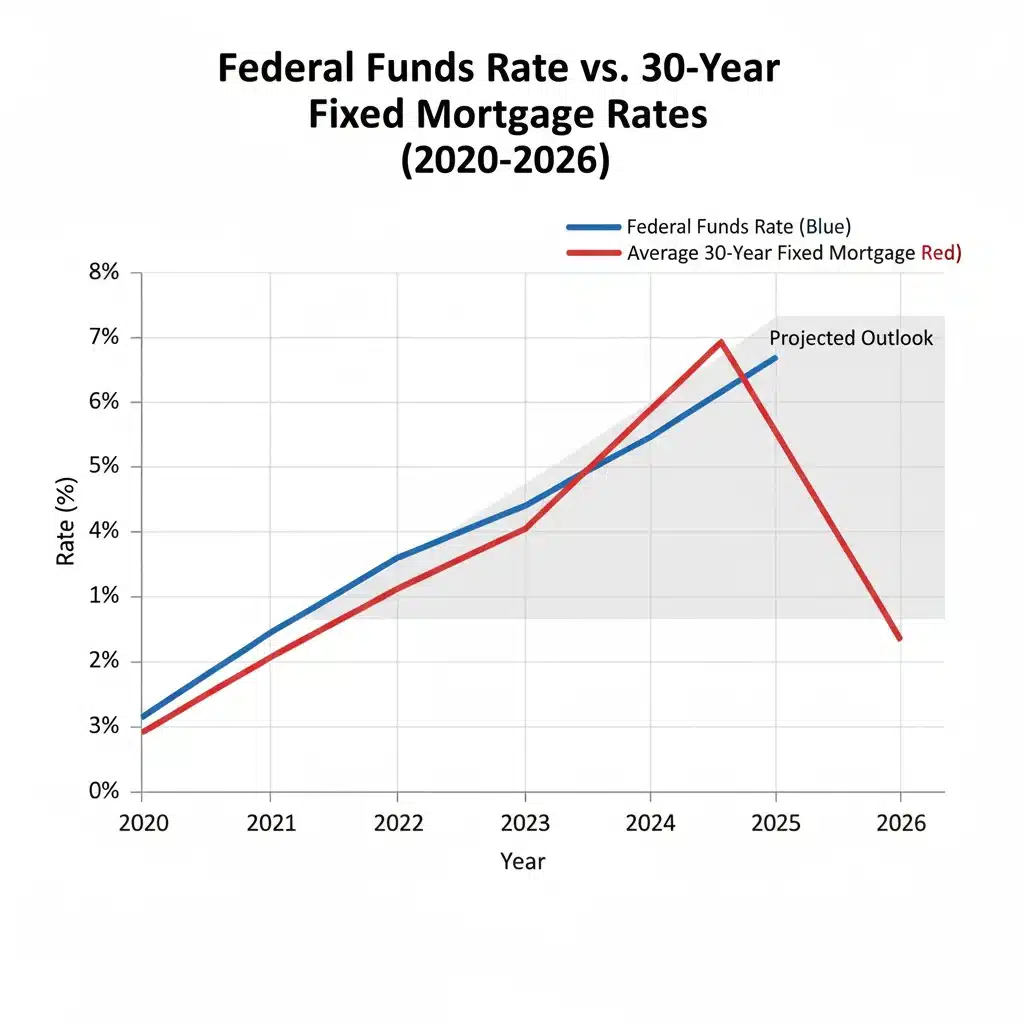
Forecasting Mortgage Rates for 2026: Expert Analysis
Predicting mortgage rates 2026 with absolute certainty is challenging, given the multitude of variables at play. However, by analyzing the Fed’s likely actions and broader economic trends, we can develop informed forecasts. Financial institutions, economists, and housing market analysts regularly provide their outlooks, often converging on a few key themes.
Consensus on Gradual Stabilization
Many experts anticipate a period of relative stabilization for mortgage rates 2026, especially if the Fed opts for a pause in December 2025. This doesn’t necessarily mean rates will be low, but rather that the dramatic swings seen in previous years might subside. The expectation is that the Fed will have achieved a more balanced position on its dual mandate, allowing for less volatile rate adjustments.
Potential for Modest Declines if Inflation Cools
If inflation continues its downward trend towards the Fed’s 2% target throughout 2025, and there are no significant resurfacing of supply-side shocks, some analysts predict modest declines in mortgage rates 2026. These declines are unlikely to bring rates back to the historically low levels seen during the pandemic but could offer some relief to prospective buyers. A consistent cooling of inflation would give the Fed more room to consider rate cuts, even if minor, which would then trickle down to mortgage products.
Upside Risk: Persistent Inflation or Economic Shocks
Conversely, if inflation proves more stubborn than anticipated, or if unforeseen economic shocks (e.g., geopolitical tensions, energy crises) emerge, mortgage rates 2026 could see upward pressure. In such a scenario, the Fed might be forced to maintain a restrictive monetary policy for longer, or even implement further rate hikes. This would translate to higher borrowing costs and a more challenging environment for the housing market.
Impact of Treasury Yields
It’s important to remember that mortgage rates 2026 are not solely determined by the federal funds rate. They are also closely tied to the yields on long-term U.S. Treasury bonds, particularly the 10-year Treasury yield. Factors influencing these yields include investor demand, inflation expectations, and global economic sentiment. Therefore, even if the Fed pauses, if Treasury yields rise due to other market forces, mortgage rates could still creep up.
How Mortgage Rates Impact Homebuyers and Homeowners
The trajectory of mortgage rates 2026 will have profound implications for various segments of the population, from first-time homebuyers to existing homeowners considering refinancing or selling.
For Prospective Homebuyers
Higher mortgage rates directly translate to higher monthly mortgage payments, reducing purchasing power and making homeownership less affordable. For those on the cusp of buying, even a slight increase in rates can significantly impact their budget and the type of home they can afford. Conversely, if mortgage rates 2026 trend downwards, it could provide a much-needed boost to affordability, drawing more buyers into the market.
First-time buyers, who often have less equity or savings, are particularly sensitive to rate fluctuations. They might need to adjust their expectations regarding home size, location, or even postpone their purchase if rates are too high. Understanding the forecast for mortgage rates 2026 allows them to plan their savings, credit score improvements, and home search strategy more effectively.
For Existing Homeowners
Current homeowners with fixed-rate mortgages are largely insulated from rate changes, as their monthly payments remain constant. However, those with adjustable-rate mortgages (ARMs) will see their payments fluctuate with market rates. If mortgage rates 2026 rise, their payments could increase, potentially straining their budgets. Conversely, falling rates could lead to lower payments.
The decision to refinance is also heavily influenced by rates. If mortgage rates 2026 are significantly lower than their current rate, homeowners might consider refinancing to reduce their monthly payments or to tap into their home equity. If rates are high, refinancing becomes less attractive. Homeowners looking to sell might also find the market dynamic affected; higher rates can cool buyer demand, potentially leading to longer selling times or price adjustments.
Overall Housing Market Impact
The collective impact of mortgage rates 2026 on buyers and sellers will shape the broader housing market. Higher rates typically lead to a slowdown in sales volume and a moderation in home price appreciation, or even declines in some areas. Lower rates, on the other hand, can stimulate demand, increase sales, and contribute to price growth. The Fed’s December 2025 decision will therefore be a key determinant of the housing market’s vitality throughout 2026.

Strategies for Navigating Mortgage Rates in 2026
Regardless of the Federal Reserve’s December 2025 decision, both prospective homebuyers and existing homeowners can adopt several strategies to navigate the anticipated mortgage rates 2026 environment effectively.
For Prospective Homebuyers:
- Get Pre-Approved: A pre-approval locks in an interest rate for a certain period, protecting you from potential rate increases. It also clarifies your budget, making your home search more focused.
- Improve Your Credit Score: A higher credit score can qualify you for better interest rates, potentially saving you tens of thousands of dollars over the life of the loan. Focus on paying bills on time, reducing debt, and avoiding new credit inquiries.
- Save for a Larger Down Payment: A larger down payment reduces the amount you need to borrow, which can lead to lower monthly payments and potentially a better interest rate.
- Consider Different Loan Products: While 30-year fixed-rate mortgages are popular, explore other options like 15-year fixed or adjustable-rate mortgages (ARMs) if they align with your financial goals and risk tolerance. Understand the pros and cons of each.
- Be Flexible with Your Home Search: If rates are high, you might need to adjust your expectations regarding location, home size, or amenities to stay within budget.
- Work with a Knowledgeable Lender: A good mortgage lender can help you understand the nuances of the market, explain different loan options, and guide you through the process, especially when mortgage rates 2026 are in flux.
For Existing Homeowners:
- Monitor Rates Regularly: If you have an ARM or are considering refinancing, keep an eye on mortgage rates 2026. Small changes can make a big difference over time.
- Assess Refinancing Opportunities: If rates drop significantly below your current rate, refinancing could save you money. Calculate the break-even point to ensure the savings outweigh the closing costs.
- Consider a Home Equity Loan or HELOC: If you need access to cash and rates are favorable, a home equity loan or Home Equity Line of Credit (HELOC) might be an option. However, be mindful of the interest rate environment.
- Prepay Your Mortgage: Even small additional payments can reduce the principal balance, saving you interest over the loan’s term, especially beneficial if mortgage rates 2026 remain elevated.
- Review Your Budget: If you have an ARM and rates are rising, re-evaluate your household budget to accommodate potentially higher monthly payments.
Beyond December 2025: Long-Term Outlook for Mortgage Rates
While the December 2025 Fed decision will undoubtedly shape the immediate future of mortgage rates 2026, it’s also important to consider the longer-term economic trajectory. The Federal Reserve’s actions are part of a continuous cycle of monetary policy adjustments, responding to evolving economic conditions.
Looking further into 2026 and beyond, several structural factors could influence mortgage rates. Demographic shifts, such as the aging population and the housing needs of younger generations, will continue to play a role. Technological advancements, particularly in construction and financing, could also introduce new dynamics. Global economic stability, trade relations, and the ongoing challenge of climate change and its economic impacts are all long-term considerations that could indirectly affect inflation, economic growth, and thus, interest rates.
The Fed’s commitment to its dual mandate will remain steadfast. As long as inflation is a concern, or if the labor market experiences significant shifts, the Fed will continue to adjust its policy. This means that while 2026 may bring a period of stabilization, future years could see renewed volatility. Staying informed about economic news, the Fed’s communications, and expert analyses will be crucial for anyone involved in the housing market for the foreseeable future. The December 2025 decision is a significant milestone, but it’s one piece of a much larger, ongoing economic puzzle that will dictate the landscape of mortgage rates 2026 and beyond.
Conclusion: Preparing for the 2026 Mortgage Landscape
The Federal Reserve’s December 2025 interest rate decision stands as a critical determinant for the direction of mortgage rates 2026. Whether the Fed opts for a hike, a pause, or a cut, each scenario carries distinct implications for the affordability and dynamics of the housing market. By closely monitoring key economic indicators such as inflation, employment data, and GDP growth, individuals can gain a clearer understanding of the forces shaping the Fed’s actions.
While expert forecasts generally lean towards a stabilization or modest decline in mortgage rates 2026, the possibility of persistent inflation or unforeseen economic shocks means that an upward trajectory remains a tangible risk. For prospective homebuyers, proactive measures like securing pre-approval, improving credit scores, and saving for larger down payments are indispensable strategies to navigate any rate environment. Existing homeowners should remain vigilant, continuously assessing refinancing opportunities and budgeting effectively, especially if they hold adjustable-rate mortgages.
Ultimately, the December 2025 decision will provide a foundational outlook for the year ahead. However, the housing and financial markets are dynamic. Staying informed, consulting with financial professionals, and adopting flexible strategies will be key to successfully navigating the evolving landscape of mortgage rates 2026 and making well-informed financial decisions for your homeownership journey.