
The pursuit of quality education often requires significant financial resources. For institutions, organizations, and even individuals dedicated to advancing learning, Federal Education Grants represent a vital lifeline. These grants, provided by various government agencies, aim to support a wide array of educational initiatives, from K-12 programs and higher education institutions to research projects and community outreach efforts. However, securing these funds is a competitive process that demands meticulous planning, a compelling proposal, and, critically, adherence to strict deadlines. As we approach the middle of the year, a particularly time-sensitive opportunity is on the horizon: the application window for many 2026 Federal Education Grants is closing soon, with a crucial deadline of June 1st.
This article serves as your comprehensive guide to navigating the landscape of Federal Education Grants, with a specific focus on the upcoming June 1st deadline for 2026 funding cycles. We will delve into what these grants entail, who is eligible, the critical steps involved in the application process, and provide invaluable tips to help you submit a successful proposal. Missing this deadline could mean deferring your educational aspirations for another year, so understanding the urgency and preparing adequately is paramount.
Anúncios
Understanding Federal Education Grants: What Are They?
Federal Education Grants are financial awards provided by the U.S. government to support educational programs, research, and services. These grants are not loans and do not need to be repaid, making them an incredibly attractive source of funding. They are typically administered by federal agencies such as the U.S. Department of Education, the National Science Foundation (NSF), the National Institutes of Health (NIH), and others, each with specific missions and funding priorities.
The scope of these grants is vast. They can fund initiatives aimed at improving teacher quality, developing innovative curricula, supporting students from disadvantaged backgrounds, promoting STEM education, enhancing vocational training, and much more. The underlying goal is always to strengthen the nation’s educational infrastructure and outcomes. For anyone looking to make a significant impact in the educational sector, understanding and leveraging Federal Education Grants is a strategic imperative.
Anúncios
For the 2026 funding cycle, many agencies are finalizing their solicitations, and the June 1st deadline is a critical marker for numerous programs. This means that interested parties need to be actively researching, preparing, and submitting their applications now. Procrastination in this arena can lead to missed opportunities and a significant setback for your educational projects.
Who is Eligible for Federal Education Grants?
Eligibility for Federal Education Grants varies significantly depending on the specific grant program. However, common eligible entities include:
- State and Local Education Agencies (SEAs and LEAs): Public school districts and state departments of education are frequent recipients, using funds to support K-12 initiatives.
- Institutions of Higher Education (IHEs): Colleges, universities, and other post-secondary institutions often secure grants for research, student support services, and program development.
- Non-profit Organizations: Many non-profits with a mission related to education, community development, or specific student populations are eligible.
- For-profit Organizations: In some cases, for-profit entities may be eligible, particularly if they are partnering with non-profits or educational institutions on specific projects.
- Individuals: While less common for large-scale projects, some federal grants are available to individuals, particularly for research fellowships or scholarships.
It is crucial to meticulously review the eligibility criteria for each grant program you are considering. The Notice of Funding Opportunity (NOFO) or Request for Applications (RFA) document will provide detailed information on who can apply, what types of projects are funded, and any specific requirements, such as matching funds or collaborative partnerships. Ignoring these details can lead to an automatic disqualification, making your hard work in preparing the application moot.
The Critical June 1st Deadline: Why It Matters
The June 1st deadline for many 2026 Federal Education Grants is not just another date on the calendar; it is a pivotal moment for securing substantial funding. Grant cycles are often planned years in advance, and missing this cut-off means your project will likely not be considered for funding in the 2026 fiscal year. This can have significant implications for project timelines, staffing, and the overall ability to implement planned educational improvements.
The urgency stems from several factors:
- Competitive Landscape: Federal grants are highly sought after. Submitting a well-prepared application on time is the first hurdle in a competitive race.
- Review Process: After the deadline, applications undergo a rigorous review process by panels of experts. This takes time, and agencies need to adhere to their own internal schedules to announce awards and disburse funds.
- Budget Cycles: Federal funding operates on specific budget cycles. Missing the deadline for a particular cycle means waiting for the next one, which could be a year or more away.
- Resource Allocation: Agencies allocate their funding based on the proposals received by the deadline. Late submissions are rarely, if ever, considered.
Therefore, treating the June 1st deadline as immutable is essential. Begin your preparations immediately if you haven’t already. This includes identifying suitable grant programs, understanding their requirements, and starting the complex process of proposal writing and budget development.
Key Steps to Successfully Apply for Federal Education Grants
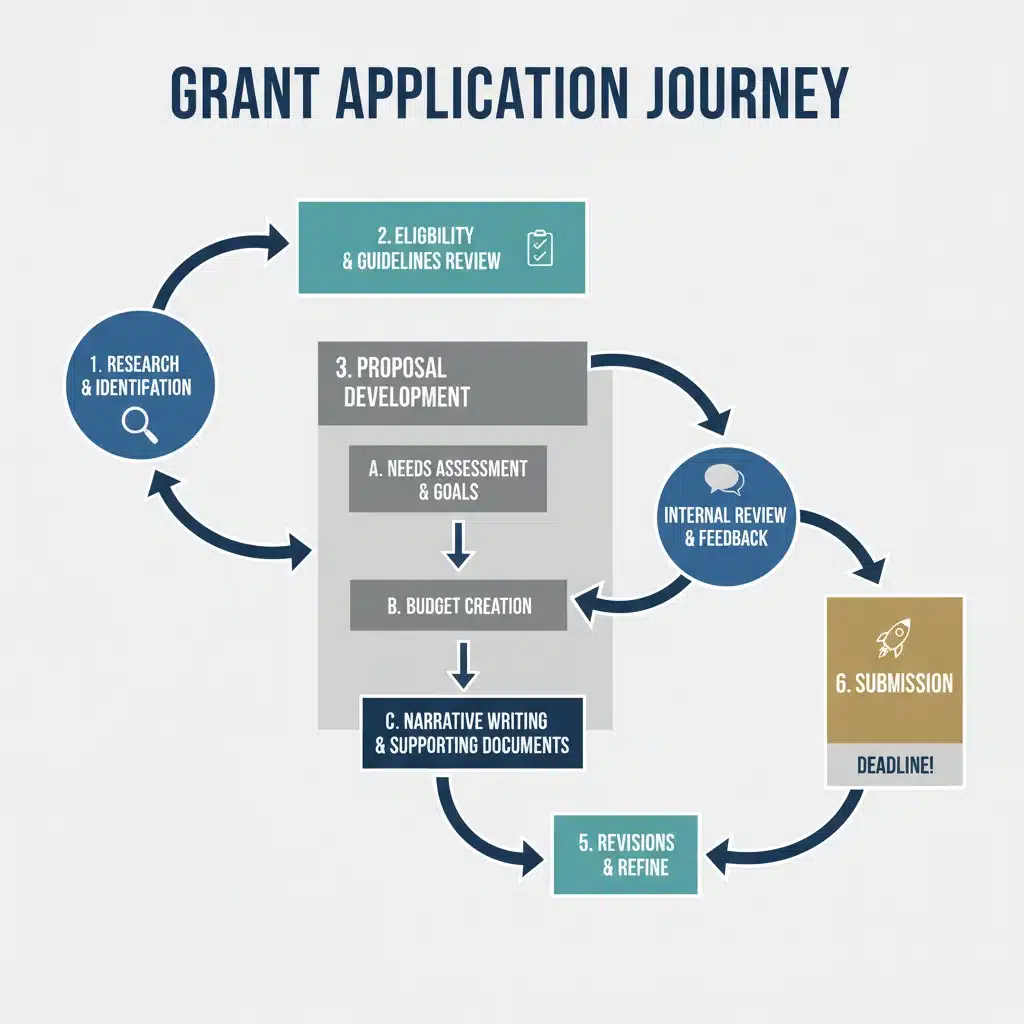
Applying for Federal Education Grants is a multi-step process that requires careful attention to detail and strategic planning. Here’s a breakdown of the essential steps:
Step 1: Research and Identify Relevant Grant Opportunities
The first and most critical step is to find grant programs that align with your project’s goals, mission, and your organization’s eligibility. Key resources for this include:
- Grants.gov: This is the central federal website for all grant opportunities. You can search by keyword, agency, and eligibility.
- U.S. Department of Education Website: The ED website provides specific information on programs related to education.
- Agency-Specific Websites: If your project is highly specialized (e.g., STEM research), check the websites of agencies like NSF or NIH directly.
- Grant Prospect Research Tools: Several subscription-based services can help streamline your search.
Pay close attention to the NOFO or RFA for each grant. These documents contain all the necessary information, including program objectives, eligibility, funding amounts, application components, and, most importantly, the deadline.
Step 2: Understand the Grant Requirements and Guidelines
Once you’ve identified potential grants, thoroughly read and understand all requirements. This includes:
- Program Objectives: Ensure your project directly addresses the grant’s stated goals.
- Eligibility Criteria: Confirm that your organization or institution meets all the requirements.
- Application Components: List every required document, narrative section, and form.
- Formatting and Submission Instructions: Strict adherence to font size, page limits, file types, and submission methods is non-negotiable.
- Budgetary Restrictions: Understand what costs are allowable and what percentage of matching funds, if any, is required.
Creating a checklist based on the NOFO is an excellent way to track your progress and ensure nothing is overlooked.
Step 3: Develop a Strong Project Proposal
The project proposal is the heart of your application. It must be compelling, well-researched, and clearly articulate your project’s need, objectives, methodology, and expected outcomes. Key components typically include:
- Executive Summary: A concise overview of your entire proposal.
- Statement of Need: Clearly define the problem your project addresses and provide data to support its significance.
- Project Goals and Objectives: State what you aim to achieve, using SMART (Specific, Measurable, Achievable, Relevant, Time-bound) objectives.
- Methodology/Project Design: Detail how you will implement your project, including activities, timeline, and personnel.
- Evaluation Plan: Explain how you will measure your project’s success and impact.
- Organizational Capacity: Demonstrate your organization’s ability to successfully execute the project.
- Sustainability Plan: Outline how the project will continue after the grant funding ends.
Remember that reviewers are often looking for innovative approaches, evidence-based practices, and a clear path to achieving measurable results. The stronger your proposal, the higher your chances of securing Federal Education Grants.

Step 4: Create a Detailed and Justified Budget
Your budget is as important as your narrative. It must be realistic, reasonable, and directly align with your project activities. Every cost item should be justified and clearly explained. Common budget categories include:
- Personnel (salaries, benefits)
- Travel
- Equipment
- Supplies
- Contractual Services
- Other Direct Costs
- Indirect Costs (if applicable)
Ensure that your budget adheres to the grant’s specific guidelines regarding allowable costs and funding limits. An inflated or poorly justified budget can raise red flags for reviewers.
Step 5: Gather Supporting Documents
Most grant applications require a suite of supporting documents. These can include:
- Letters of Support/Commitment from partners
- Resumes or CVs of key personnel
- Organizational charts
- Proof of non-profit status (if applicable)
- Financial statements
- Memoranda of Understanding (MOUs)
Start gathering these documents early, as some may require input from external parties and take time to secure.
Step 6: Register and Prepare for Electronic Submission
The vast majority of Federal Education Grants are submitted electronically, primarily through Grants.gov. If you haven’t already, your organization will need to:
- Obtain a Data Universal Numbering System (DUNS) number.
- Register with the System for Award Management (SAM.gov) and keep it active. This process can take several weeks, so do not delay.
- Register with Grants.gov.
- Identify and register an Authorized Organization Representative (AOR) who will officially submit the application.
These registrations are mandatory and can be time-consuming. Begin this process well in advance of the June 1st deadline to avoid last-minute crises.
Step 7: Write, Review, and Revise
Grant writing is an iterative process. Draft your proposal early, and then dedicate ample time to reviewing and revising it. Seek feedback from colleagues, subject matter experts, and even external reviewers if possible. Look for:
- Clarity and coherence
- Alignment with grant objectives
- Completeness of all required sections
- Accuracy of data and budget figures
- Grammar, spelling, and punctuation errors
A fresh pair of eyes can often catch mistakes or areas that need improvement. This critical review phase can significantly strengthen your application for Federal Education Grants.
Step 8: Submit Your Application Early!
Do not wait until the last minute on June 1st to submit your application. Technical glitches, internet issues, or unexpected system maintenance can occur. Aim to submit your application at least 24-48 hours before the official deadline. This buffer allows you to address any unforeseen problems that might arise during the submission process. Once submitted, you should receive a confirmation email. Keep this for your records.
Maximizing Your Chances: Tips for a Winning Proposal
Beyond the fundamental steps, several strategies can significantly enhance your proposal’s competitiveness for Federal Education Grants:
- Align with Federal Priorities: Research current federal education initiatives and priorities. Tailoring your project to address these broader goals can make your proposal more appealing.
- Evidence-Based Practices: Whenever possible, base your project design on evidence-based practices or research-backed interventions. This demonstrates efficacy and increases credibility.
- Strong Data and Needs Assessment: Provide compelling data to illustrate the need for your project. Quantitative and qualitative data strengthen your argument.
- Clear and Concise Language: Avoid jargon. Write in clear, concise, and persuasive language that is easy for reviewers to understand, even if they are not specialists in your exact field.
- Demonstrate Impact: Clearly articulate the anticipated impact of your project. How will it benefit students, educators, or the community? How will it contribute to broader educational goals?
- Collaboration and Partnerships: Highlight meaningful partnerships with other organizations, schools, or community groups. Collaboration often signals broader support and increased capacity.
- Sustainability Plan: Reviewers want to know that your project will have a lasting impact beyond the grant funding period. Outline a clear plan for how the project will continue or be sustained.
- Adhere to All Instructions: This cannot be stressed enough. Failure to follow instructions precisely is a common reason for disqualification.
- Professional Appearance: Ensure your proposal is well-organized, easy to read, and free of errors. A professional presentation reflects positively on your organization.
Common Pitfalls to Avoid
Even well-intentioned applicants can fall prey to common mistakes that derail their chances of securing Federal Education Grants. Be mindful of these pitfalls:
- Missing the Deadline: The most obvious and most fatal error. June 1st is non-negotiable.
- Not Following Instructions: Failing to adhere to page limits, formatting requirements, or including all necessary attachments.
- Weak or Unjustified Budget: A budget that doesn’t align with the narrative or includes unallowable costs.
- Lack of Clarity: A proposal that is vague, poorly organized, or uses excessive jargon.
- Ignoring Eligibility Criteria: Applying for a grant for which your organization is not eligible.
- Lack of Data/Needs Assessment: Failing to provide compelling evidence for the problem your project addresses.
- Procrastination: Starting the application process too late, leading to rushed work and errors.
- Generic Proposal: Submitting a boilerplate proposal that isn’t specifically tailored to the grant’s objectives. Each grant has unique requirements and priorities, and a ‘one-size-fits-all’ approach rarely succeeds.
- Overpromising or Under-resourcing: Proposing an overly ambitious project with insufficient resources, or conversely, a project that doesn’t fully utilize the potential funding. A realistic scope is crucial.
- Insufficient Evaluation Plan: Not clearly defining how the project’s success will be measured. Grantors want to see tangible, measurable outcomes.
- Failing to Demonstrate Sustainability: Projects that end abruptly when funding ceases are less attractive. Show how your initiative will continue to make an impact long-term.
- Incomplete Registrations: Not having current DUNS, SAM.gov, and Grants.gov registrations can prevent submission, even if your proposal is perfect. These systems require time to process.
Post-Submission: What to Expect
After you’ve successfully submitted your application for Federal Education Grants, the waiting game begins. The review process can take several months. Here’s what you can generally expect:
- Confirmation: You should receive an email confirmation from Grants.gov that your submission was successful.
- Agency Review: Federal agencies will conduct an initial administrative review to ensure all requirements are met.
- Peer Review: Proposals are typically sent to panels of external experts (peer reviewers) who evaluate them based on the criteria outlined in the NOFO.
- Program Officer Review: Agency program officers will consider the peer review recommendations and make final funding decisions, often taking into account programmatic priorities.
- Notification: You will eventually receive official notification regarding the status of your application – whether it has been selected for funding, declined, or placed on a waiting list. This could be anywhere from 3 to 9 months after the deadline.
- Award Negotiation: If selected, there will be a negotiation phase where the agency may request revisions to the budget or project plan before the final award is made.
During this period, it’s generally best to avoid contacting the agency unless you have a specific, urgent question. They will typically reach out to you if they need additional information.
Conclusion: Act Now for 2026 Federal Education Grants
The opportunity to secure Federal Education Grants for the 2026 funding cycle is a significant one, but it comes with a strict and rapidly approaching deadline: June 1st. These grants can transform educational programs, foster innovation, and provide critical support to students and communities nationwide. However, success hinges on thorough preparation, meticulous attention to detail, and a deep understanding of the application process.
By diligently researching opportunities, crafting a compelling and evidence-based proposal, developing a realistic budget, gathering all necessary supporting documents, and adhering strictly to submission guidelines, you significantly increase your chances of receiving funding. Remember to begin the registration process for Grants.gov and SAM.gov well in advance, as these can take considerable time.
Do not let this time-sensitive opportunity pass you by. Start your application process today, leverage the resources available, and aim for an early submission. Your proactive efforts now could unlock transformative funding that empowers your educational vision and makes a lasting positive impact for years to come. The future of education often depends on securing these vital funds, and the June 1st deadline is your gateway to making that future a reality.