
Urgent: 2026 Congressional Bill Proposes 15% Tax Credit for U.S. Renewable Energy Investments – What You Need to Know Now
The landscape of energy policy in the United States is on the cusp of a potentially transformative shift. A new Congressional Bill, currently making its way through legislative channels, proposes a significant renewable energy tax credit of 15% for investments made in U.S. renewable energy projects. This is not merely a tweak to existing incentives; it represents a substantial commitment to accelerating the transition to clean energy, with far-reaching implications for businesses, investors, and the broader economy. Understanding the nuances of this proposed legislation is crucial for anyone involved in or considering the renewable energy sector.
Anúncios
For years, various tax incentives have played a pivotal role in fostering the growth of renewable energy. However, the proposed 2026 bill aims to solidify and expand upon these efforts, providing a clear and compelling financial impetus for further investment. This article delves deep into the specifics of this impending legislation, exploring its potential impact, who stands to benefit, and what steps stakeholders should consider taking to prepare for its enactment.
The Core of the 2026 Renewable Energy Tax Credit Proposal
At its heart, the 2026 Congressional Bill seeks to establish a 15% renewable energy tax credit on qualifying investments. This credit is designed to reduce the tax liability of individuals and corporations that commit capital to renewable energy generation, storage, and related infrastructure within the United States. While the exact language is still being refined, early indications suggest a broad scope that could encompass a wide array of renewable technologies.
Anúncios
The primary objective behind this substantial tax credit is multifaceted. Firstly, it aims to stimulate domestic manufacturing and job creation within the renewable energy sector, reducing reliance on foreign supply chains. Secondly, it is a strategic move to combat climate change by accelerating the deployment of clean energy sources, thereby reducing greenhouse gas emissions. Thirdly, it seeks to enhance energy independence and security for the nation by diversifying its energy portfolio.
Historically, tax credits like the Investment Tax Credit (ITC) for solar and the Production Tax Credit (PTC) for wind have proven incredibly effective in driving down costs and increasing adoption. The proposed 15% renewable energy tax credit builds upon this success, offering a direct and significant financial incentive that could unlock billions in private investment. This isn’t just about environmental stewardship; it’s about smart economic policy that positions the U.S. as a leader in the global clean energy transition.
Who Benefits from the Proposed 15% Tax Credit?
The beauty of a well-structured tax credit lies in its ability to create a ripple effect, benefiting various segments of the economy. The proposed 15% renewable energy tax credit is no exception. Here’s a breakdown of the key beneficiaries:
- Renewable Energy Developers and Project Owners: This group stands to gain the most directly. The 15% credit will significantly improve the financial viability of new projects, reducing upfront capital costs and accelerating return on investment. This will encourage the development of more solar farms, wind parks, geothermal plants, and hydroelectric facilities across the country.
- Investors (Individual and Institutional): For those looking to invest in sustainable ventures, the tax credit makes renewable energy projects even more attractive. It lowers the risk profile and enhances potential returns, drawing in new capital that might otherwise be allocated to less sustainable sectors.
- Manufacturers of Renewable Energy Components: With increased project development comes higher demand for solar panels, wind turbine components, batteries, inverters, and other essential equipment. This will stimulate domestic manufacturing, leading to job growth and technological innovation.
- Utilities and Energy Providers: The credit can help utilities meet renewable portfolio standards and reduce their carbon footprint more economically. It incentivizes them to invest in or procure more clean energy, ultimately benefiting consumers through potentially stable or lower energy costs in the long run.
- Homeowners and Small Businesses (Potentially): While the primary focus might be on large-scale projects, similar to existing credits, there’s a strong possibility that aspects of this bill or complementary legislation could extend benefits to smaller residential and commercial installations, making rooftop solar and other localized renewable solutions more accessible.
- The U.S. Economy and Environment: On a macro level, the sustained investment in renewable energy will create hundreds of thousands of jobs, reduce reliance on fossil fuels, improve air quality, and contribute significantly to national climate goals. It’s a win-win for both economic prosperity and environmental health.
Eligibility Criteria and Qualifying Investments
While the full legislative text is still awaited, previous tax credit structures provide a strong indication of what the eligibility criteria for the 15% renewable energy tax credit might entail. Typically, these credits are tied to specific types of renewable energy technologies and project characteristics.
Expect the bill to clearly define ‘renewable energy investment.’ This will likely include, but not be limited to:
- Solar Photovoltaic (PV) and Concentrated Solar Power (CSP) installations: Both utility-scale and potentially distributed generation projects.
- Wind Energy projects: Onshore and offshore wind farms.
- Geothermal Energy systems: Power generation and direct-use applications.
- Hydropower projects: New facilities and efficiency upgrades to existing ones.
- Bioenergy and Biomass facilities: Projects that convert organic matter into energy, often with specific sustainability criteria.
- Energy Storage Technologies: Batteries and other storage solutions that enhance grid reliability and integrate renewable energy more effectively. This is a critical component for maximizing the value of intermittent renewable sources.
- Fuel Cell Technology: Clean energy generation through electrochemical reactions.
Beyond the technology itself, other factors might determine eligibility, such as:
- Domestic Content Requirements: To bolster U.S. manufacturing, there could be provisions requiring a certain percentage of components or materials to be sourced domestically.
- Prevailing Wage and Apprenticeship Requirements: To ensure high-quality job creation, projects might need to adhere to prevailing wage standards and include apprenticeship programs.
- Project Commencement and Completion Deadlines: Tax credits often have ‘begin construction’ or ‘in service’ dates that projects must meet to qualify.
It is imperative for potential beneficiaries to closely monitor the evolving language of the bill to ensure their projects align with the final eligibility requirements. Early planning based on anticipated criteria will be key to maximizing the benefits of this renewable energy tax credit.
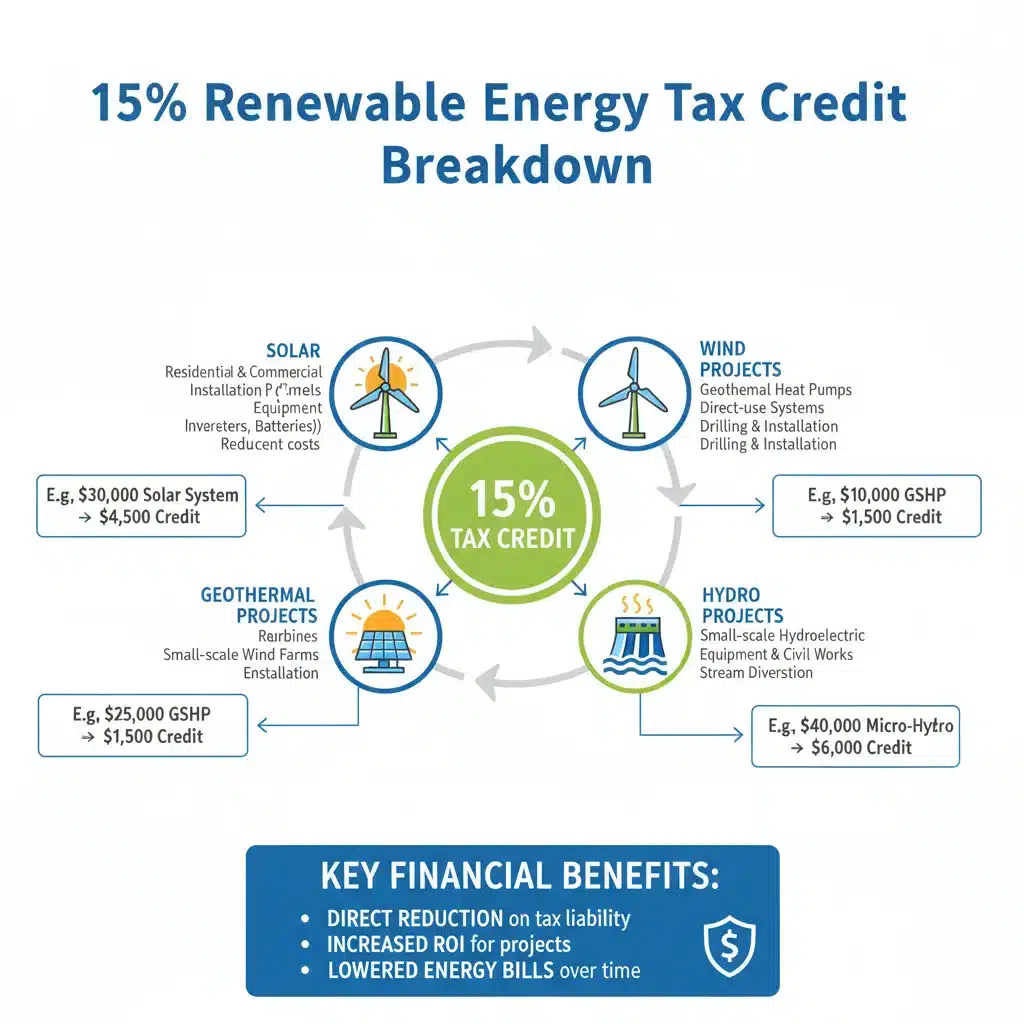
The Economic and Environmental Impact of a 15% Renewable Energy Tax Credit
The potential economic and environmental ramifications of a 15% renewable energy tax credit are profound. Economically, such a credit acts as a powerful market signal, directing capital towards clean energy and fostering a robust domestic industry. It can:
- Drive Investment: Lowering the cost of renewable energy projects directly encourages more investment, leading to a surge in new developments. This means more construction jobs, more manufacturing jobs, and more operational jobs across the country.
- Reduce Energy Costs: As renewable energy becomes more prevalent and cost-effective due to incentives, it can contribute to more stable and potentially lower electricity prices for consumers over time, reducing reliance on volatile fossil fuel markets.
- Boost Innovation: The increased investment fosters a competitive environment, spurring innovation in renewable energy technologies, from more efficient solar cells to advanced battery storage solutions. This technological leadership can create export opportunities for U.S. companies.
- Enhance Energy Security: By diversifying the energy mix and reducing dependence on imported fossil fuels, the U.S. strengthens its national energy security.
Environmentally, the impact is equally significant:
- Accelerated Decarbonization: A 15% renewable energy tax credit will significantly accelerate the retirement of fossil fuel power plants and their replacement with clean energy sources, leading to substantial reductions in greenhouse gas emissions.
- Improved Air Quality: Less reliance on fossil fuels means fewer pollutants released into the atmosphere, leading to better air quality and public health outcomes.
- Water Conservation: Many renewable energy technologies, particularly solar and wind, require significantly less water than traditional thermal power plants, contributing to water conservation efforts.
- Meeting Climate Goals: This legislation could be a critical piece in helping the U.S. meet its commitments under international climate agreements and achieve its own ambitious emissions reduction targets.
The cascading effects of this legislation could fundamentally reshape the U.S. energy landscape, positioning it for a more sustainable and prosperous future.
Navigating the Legislative Process and Future Outlook
Understanding that this is a proposed bill is important. Legislation, especially one with such broad implications, undergoes a rigorous process of committee review, debate, potential amendments, and votes in both the House and Senate before it can be signed into law by the President. While there is strong bipartisan support for renewable energy in many forms, the specifics of a 15% renewable energy tax credit will undoubtedly be subject to intense scrutiny and negotiation.
Key factors that will influence its passage include:
- Budgetary Concerns: The cost of the tax credit to the federal treasury will be a major point of discussion.
- Industry Lobbying: Renewable energy advocates and other industry groups will be actively lobbying for its passage, while competing energy sectors may voice concerns.
- Political Climate: The broader political environment and priorities of the current administration and Congress will play a significant role.
- Public Support: Continued public demand for clean energy and climate action will provide momentum for the bill.
Given the urgency of climate action and the economic benefits associated with renewable energy, there is a strong likelihood that some form of this 15% renewable energy tax credit will pass. However, the final details regarding commencement dates, sunset clauses, and specific technology inclusions could change. Stakeholders should remain engaged with policy news and industry updates to stay informed.
Preparing for the New Renewable Energy Tax Credit: A Strategic Guide
For businesses, investors, and individuals eyeing the renewable energy sector, proactive preparation is paramount. Regardless of the final form, the direction of travel is clear: significant incentives for clean energy are on the horizon. Here’s how to prepare for the potential 15% renewable energy tax credit:
- Stay Informed: Regularly monitor legislative updates from Congressional committees, industry associations, and reputable news sources. Understanding the evolving details is critical for strategic planning.
- Assess Project Pipeline: Review your current and prospective renewable energy projects. Identify which ones might qualify for the credit and begin to model the financial impact of a 15% reduction in tax liability.
- Engage with Experts: Consult with tax advisors, legal counsel specializing in energy law, and financial consultants who have expertise in government incentives. They can help navigate the complexities of the legislation and ensure compliance.
- Strengthen Supply Chains: If domestic content requirements are included, begin exploring partnerships with U.S. manufacturers or assess the feasibility of localizing your supply chain.
- Workforce Development: Consider investing in training and apprenticeship programs now to build a skilled workforce that can meet the anticipated demand for renewable energy project development and operation.
- Advocacy and Networking: Join industry groups and participate in advocacy efforts to ensure your voice is heard during the legislative process. Network with other stakeholders to share insights and best practices.
- Financial Modeling and Due Diligence: Update your financial models to incorporate the potential tax credit. Conduct thorough due diligence on potential projects, considering not only technical feasibility but also regulatory and financial compliance.
- Technology Evaluation: Keep abreast of advancements in renewable energy technologies. The bill might favor certain innovations or offer additional incentives for cutting-edge solutions, making it crucial to invest in the most impactful and efficient systems.
By taking these proactive steps, stakeholders can position themselves to fully leverage the benefits of the 15% renewable energy tax credit, ensuring they are not only compliant but also competitive in the burgeoning clean energy market.

Potential Challenges and Considerations
While the 15% renewable energy tax credit offers immense opportunities, it’s also important to acknowledge potential challenges and considerations that may arise:
- Implementation Complexity: New tax legislation can often be complex to implement, requiring clear guidance from the Treasury Department and IRS. Businesses will need to carefully track regulations.
- Market Saturation: A significant surge in investment could, in some niche areas, lead to temporary market saturation or supply chain bottlenecks if not managed carefully.
- Intermittency and Grid Integration: Increased renewable energy penetration necessitates continued investment in grid modernization and energy storage solutions to manage intermittency. The bill may need to address these aspects explicitly or implicitly.
- Long-term Policy Certainty: While a 15% credit is strong, long-term policy certainty beyond 2026 will be crucial for sustained investment and planning, especially for projects with multi-year development cycles.
- Equitable Distribution of Benefits: Ensuring that the benefits of the tax credit are distributed equitably across different regions and demographics, including underserved communities, will be an important consideration for policymakers.
- Competition and Innovation: While the credit will spur innovation, it also intensifies competition. Companies will need to continually innovate and optimize their operations to remain competitive.
Addressing these challenges will require ongoing collaboration between government, industry, and academia. The success of the 15% renewable energy tax credit will not only depend on its passage but also on effective implementation and adaptation to market dynamics.
The Broader Context: U.S. Leadership in Clean Energy
The proposed 15% renewable energy tax credit is more than just a financial incentive; it’s a statement about the U.S.’s commitment to regaining and solidifying its leadership in the global clean energy transition. Nations worldwide are racing to develop and deploy renewable technologies, recognizing the economic and geopolitical advantages of energy independence and environmental sustainability. By providing such a robust credit, the U.S. aims to:
- Attract Global Investment: The U.S. market becomes even more appealing to international investors and renewable energy companies looking for stable and incentivized environments.
- Foster Technological Advancement: Increased domestic investment will inevitably lead to breakthroughs in research and development, pushing the boundaries of what’s possible in clean energy.
- Set a Global Example: Demonstrating strong policy support for renewable energy can encourage other nations to follow suit, contributing to a collective global effort against climate change.
- Create New Economic Opportunities: From manufacturing jobs in solar panel factories to high-tech positions in grid management, the renewable energy sector is a fertile ground for new economic growth.
This bill, if enacted, will send a clear signal that the U.S. is serious about its clean energy future, creating a positive feedback loop of investment, innovation, and job creation. The renewable energy tax credit will be a cornerstone of this ambitious vision.
Conclusion: Seizing the Opportunity of the 2026 Renewable Energy Tax Credit
The proposed 2026 Congressional Bill, offering a 15% renewable energy tax credit for U.S. investments, stands as a monumental opportunity for the nation’s energy future. It promises to be a catalyst for unprecedented growth in the clean energy sector, driving economic development, creating jobs, and making significant strides toward environmental sustainability. For businesses, investors, and policymakers alike, the time to understand and prepare for this shift is now.
As the legislative process unfolds, vigilance and strategic planning will be key. Those who proactively align their strategies with the anticipated benefits and requirements of this renewable energy tax credit will be best positioned to capitalize on the coming wave of clean energy investment. The future of energy in the U.S. is looking greener, and this bill could be the powerful spark that ignites a new era of sustainable prosperity.
Don’t wait for the bill to pass; start your preparations today to ensure you are ready to harness the full potential of this game-changing legislation.