Student Loan Forgiveness 2026: Your Comprehensive Guide to Eligibility and Deadlines
The landscape of student loan debt in the United United States is constantly evolving, with millions of borrowers seeking relief. As we look towards 2026, understanding the latest updates, eligibility criteria, and application deadlines for student loan forgiveness 2026 programs is more crucial than ever. This extensive guide aims to demystify the complexities surrounding federal student aid programs, helping you navigate your path to potential loan discharge.
Anúncios
Student loan debt remains a significant financial burden for many Americans. The promise of relief through various forgiveness programs offers a beacon of hope. However, these programs are often subject to change, making it essential for borrowers to stay informed. Our focus today is on what you need to know about student loan forgiveness 2026, including who qualifies, what steps to take, and when to take them.
Understanding the Current State of Student Loan Forgiveness Programs
Before diving into the specifics of student loan forgiveness 2026, it’s important to grasp the foundational programs that are currently in place and likely to continue, albeit with potential modifications. These programs generally fall into several categories, each designed to assist different segments of the borrower population based on their profession, income, or specific circumstances.
Anúncios
Public Service Loan Forgiveness (PSLF)
The Public Service Loan Forgiveness (PSLF) program is one of the most well-known avenues for federal student loan relief. It’s designed to encourage individuals to enter and remain in full-time public service jobs. Under PSLF, eligible borrowers can have the remainder of their Direct Loans forgiven after making 120 qualifying monthly payments while working for a qualifying employer. Qualifying employers typically include government organizations (federal, state, local, or tribal) and not-for-profit organizations that are tax-exempt under Section 501(c)(3) of the Internal Revenue Code.
For student loan forgiveness 2026, it’s anticipated that PSLF will continue to be a cornerstone program. Borrowers need to ensure they are on an income-driven repayment (IDR) plan, as payments made under other plans may not count towards the 120 required payments. Keeping meticulous records of employment and payments is vital for PSLF applicants.
Income-Driven Repayment (IDR) Plan Forgiveness
Income-Driven Repayment (IDR) plans are designed to make student loan payments more manageable by capping them at a percentage of your discretionary income. There are several IDR plans, including Revised Pay As You Earn (REPAYE), Pay As You Earn (PAYE), Income-Based Repayment (IBR), and Income-Contingent Repayment (ICR). A key feature of these plans is that any remaining loan balance is forgiven after 20 or 25 years of qualifying payments, depending on the specific plan and whether the loans are for undergraduate or graduate study.
The Biden-Harris administration has made significant efforts to refine and improve IDR plans, notably through the Saving on a Valuable Education (SAVE) Plan, which replaced the REPAYE Plan. The SAVE Plan offers more generous terms, including lower monthly payments for many borrowers and an interest subsidy. For those seeking student loan forgiveness 2026 through IDR, understanding the nuances of the SAVE Plan and its predecessors will be critical. The timeline for forgiveness under IDR plans can be lengthy, making consistent enrollment and annual recertification essential.
Teacher Loan Forgiveness
Teachers who work full-time for five complete and consecutive academic years in certain low-income schools or educational service agencies may be eligible for Teacher Loan Forgiveness. Depending on the subject taught, borrowers can receive up to $17,500 in forgiveness for Direct Subsidized and Unsubsidized Loans and Federal Stafford Loans. This program is distinct from PSLF, and it’s important for educators to understand which program best suits their situation, as the benefits and requirements differ.
Total and Permanent Disability (TPD) Discharge
Borrowers who are totally and permanently disabled may be eligible to have their federal student loans discharged. This discharge can be obtained through a determination by the Social Security Administration (SSA), a physician’s certification, or a VA determination. The TPD discharge provides significant relief for those unable to work due to a severe medical condition. It’s crucial to understand the monitoring period that follows a TPD discharge, during which income and work activity are reviewed.
Borrower Defense to Repayment
This provision allows for loan forgiveness if a school engaged in misconduct, such as misleading students or violating state laws, that directly relates to the student’s federal student loans. While specific cases are often adjudicated, broad class-action settlements have also provided relief to many borrowers from certain institutions. Borrowers who believe they were defrauded by their institutions should explore this option.
Key Eligibility Criteria for Student Loan Forgiveness 2026
Eligibility is the cornerstone of any forgiveness program. While specific requirements can vary, several common themes emerge across all programs. For student loan forgiveness 2026, you will generally need to meet criteria related to your loan type, employment, income, and payment history.
Loan Type and Status
Most federal student loan forgiveness programs apply exclusively to federal loans, specifically Direct Loans. If you have Federal Family Education Loan (FFEL) Program loans or Federal Perkins Loans, you might need to consolidate them into a Direct Consolidation Loan to become eligible for certain programs like PSLF or IDR forgiveness. Private student loans are typically not eligible for federal forgiveness programs.
Your loan status also matters. Loans must generally be in good standing, not in default, or have been rehabilitated if they were previously in default. Understanding your loan portfolio and its current status is the first step toward determining your eligibility.
Employment Requirements
For programs like PSLF and Teacher Loan Forgiveness, specific employment criteria must be met. This includes working full-time for a qualifying employer (PSLF) or in a low-income school (Teacher Loan Forgiveness). The definition of “full-time” can vary, but it generally means working at least 30 hours per week. It’s crucial to verify that your employer qualifies for these programs, as not all non-profit organizations or government entities may meet the strict criteria.
Income and Family Size
For income-driven repayment plans, your eligibility and monthly payment amount are directly tied to your adjusted gross income (AGI) and family size. As your income or family size changes, your payments may be adjusted, and this can impact the timeline for forgiveness. Annual recertification of your income and family size is mandatory for IDR plans.
Payment History
Consistent, on-time payments are a critical component for many forgiveness programs. For PSLF, 120 qualifying monthly payments are required. For IDR forgiveness, it’s 20 or 25 years of payments. Understanding what constitutes a “qualifying payment” is essential. Generally, these are payments made in full, on time, while you are employed by a qualifying employer (for PSLF) and enrolled in an eligible repayment plan.
Anticipated Changes and Updates for Student Loan Forgiveness 2026
The landscape of student loan policy is dynamic, with potential legislative changes, administrative actions, and court rulings constantly shaping the future of forgiveness programs. While it’s impossible to predict every change, we can anticipate areas where updates might occur for student loan forgiveness 2026.
Potential for New Legislative Actions
Student loan debt remains a hot topic in national political discourse. Depending on the political climate and upcoming elections, there could be new legislative proposals aimed at broadening forgiveness eligibility, simplifying application processes, or introducing new types of relief. Borrowers should pay attention to federal legislative developments as these can significantly impact future forgiveness opportunities.
Continued Refinements to Existing Programs
The Department of Education frequently refines existing programs to improve efficiency and access. The recent changes to IDR plans, particularly the introduction of the SAVE Plan, demonstrate a commitment to making repayment more manageable and forgiveness more attainable. Expect ongoing adjustments to these plans, as well as to PSLF, aimed at addressing borrower challenges and streamlining processes. These refinements could impact how payments are counted, how eligibility is determined, and how forgiveness is ultimately granted.
Impact of Economic Conditions
Broader economic conditions can also influence student loan policy. Periods of economic downturn or high unemployment might prompt policymakers to consider additional relief measures. Conversely, periods of strong economic growth might lead to less emphasis on broad forgiveness initiatives. Staying attuned to economic indicators can provide context for potential policy shifts related to student loan forgiveness 2026.

Critical Application Deadlines and How to Apply for Student Loan Forgiveness 2026
Meeting deadlines and submitting correct applications are paramount to securing student loan forgiveness. While there isn’t a single universal deadline for all forgiveness programs, each program has its own set of timelines and application requirements. Planning ahead is crucial for student loan forgiveness 2026.
PSLF Application Process and Deadlines
For PSLF, there isn’t a strict application deadline in the sense of a single cutoff date. Instead, borrowers apply for forgiveness after they have made 120 qualifying payments. However, it is highly recommended to submit the PSLF Employment Certification Form (ECF) annually or whenever you change employers. This form helps track your progress and ensures your employment and payments are being counted correctly. By 2026, the process should be well-established, but regular certification remains key. The final application for forgiveness is submitted once all 120 payments are met.
IDR Plan Recertification
If you are on an IDR plan, you must recertify your income and family size annually. Failing to do so can result in your monthly payments increasing and any accrued unpaid interest being capitalized (added to your principal balance). While the Department of Education typically notifies you when your recertification is due, it’s your responsibility to ensure it’s completed on time. Keep a calendar reminder for your annual recertification date to avoid any disruptions to your progress toward student loan forgiveness 2026.
Teacher Loan Forgiveness Application
Teachers apply for forgiveness after completing their five years of qualifying service. The application process involves submitting a Teacher Loan Forgiveness Application to your loan servicer, along with certification from your school’s chief administrative officer. There isn’t an annual deadline, but you must apply after meeting the service requirement.
TPD Discharge Application
For TPD discharge, you apply through Nelnet, the servicer for TPD discharges. There are no specific deadlines, but it’s advisable to apply as soon as you meet the criteria and have the necessary documentation (SSA notice, physician’s certification, or VA determination). The sooner you apply, the sooner relief can be processed.
General Tips for Application Success
- Keep Meticulous Records: Maintain copies of all loan documents, payment confirmations, employment verification, and correspondence with your loan servicer.
- Communicate with Your Servicer: If you have questions or encounter issues, reach out to your loan servicer promptly. They are your primary point of contact for navigating these programs.
- Utilize Federal Resources: The Federal Student Aid (FSA) website (StudentAid.gov) is an invaluable resource for official information, application forms, and program details.
- Stay Informed: Regularly check official government websites and reputable financial news sources for updates on student loan policies and programs.
Navigating Common Challenges in Student Loan Forgiveness 2026
Even with clear guidelines, borrowers often face challenges when pursuing student loan forgiveness. Understanding these common pitfalls can help you avoid them as you plan for student loan forgiveness 2026.
Incorrect Payment Counting
One of the most frequent issues, especially with PSLF, is incorrect payment counting. Borrowers might find that some of their payments were not counted as qualifying. This often stems from being on the wrong repayment plan, payments being late, or employment not being properly certified. Regularly checking your payment count through your servicer and submitting the ECF annually can help catch and rectify these issues early.
Employer Eligibility Issues
For PSLF, determining if an employer qualifies can be confusing. While government entities are generally straightforward, non-profit organizations must meet specific IRS tax-exempt status. If you are unsure, use the PSLF Help Tool on StudentAid.gov to confirm your employer’s eligibility. If your employer is not in the database, you may need to submit additional documentation for review.
Recertification Oversights for IDR Plans
Missing the annual recertification for IDR plans is a common error that can lead to increased payments and interest capitalization, setting back your progress toward forgiveness. Set multiple reminders and ensure you submit your updated income and family size information well before the deadline.
Consolidation Missteps
Borrowers with older FFEL or Perkins loans might need to consolidate them into a Direct Loan to qualify for PSLF or certain IDR benefits. It’s crucial to understand that consolidation creates a new loan with a new payment history. If you’ve already made payments on existing loans, consolidating them might reset your payment count for PSLF, though recent temporary waivers have sometimes allowed past payments to count under certain conditions. Always research the implications of consolidation carefully.
Scams and Misinformation
The complexity of student loan forgiveness makes borrowers vulnerable to scams. Be wary of companies that promise guaranteed forgiveness for a fee, ask for your FSA ID, or pressure you into quick decisions. Always verify information with official sources like your loan servicer or StudentAid.gov. There is no fee to apply for federal student loan forgiveness programs.
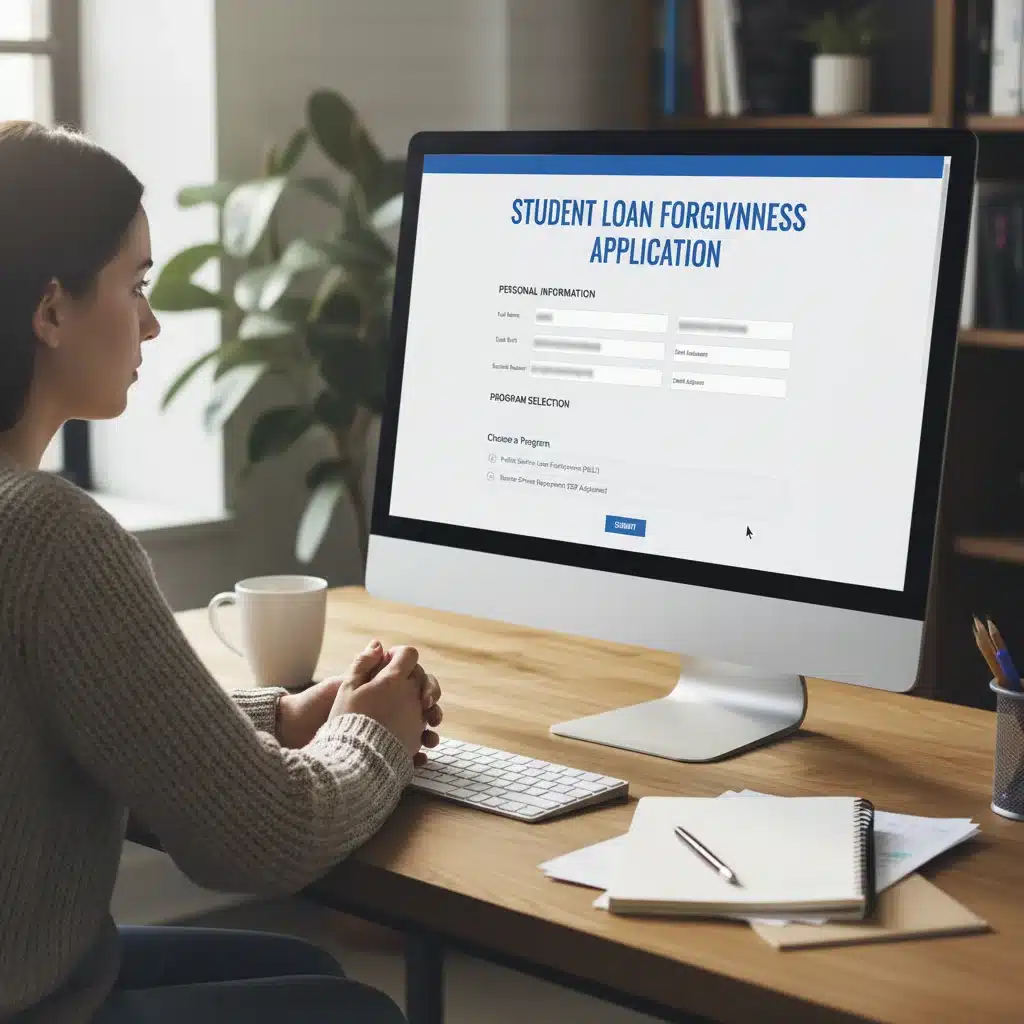
Future Outlook for Student Loan Forgiveness
As we move closer to 2026 and beyond, the discussion around student loan debt and forgiveness will undoubtedly continue. The long-term trajectory of these programs is subject to various influences, including political priorities, economic conditions, and the ongoing advocacy from borrower groups.
The Role of Advocacy and Policy
Advocacy groups continue to push for broader student loan relief, simpler application processes, and more equitable access to forgiveness. These efforts can influence future legislative and administrative actions. Policymakers are constantly evaluating the effectiveness and impact of current programs, which could lead to further reforms or new initiatives related to student loan forgiveness 2026 and subsequent years.
Economic Implications
The economic impact of student loan debt on individuals and the broader economy is a significant consideration. Decisions around forgiveness are often weighed against potential effects on inflation, consumer spending, and educational costs. These broader economic factors will continue to shape the policy landscape.
Personal Financial Planning
Regardless of future policy changes, proactive personal financial planning remains essential. This includes understanding your loan terms, exploring all available repayment options, and making informed decisions about your financial future. Even if you don’t qualify for full forgiveness, optimizing your repayment plan can significantly reduce your financial burden.
Conclusion: Preparing for Student Loan Forgiveness 2026
The path to student loan forgiveness 2026 requires diligence, patience, and a commitment to staying informed. While the specifics of programs can evolve, the core principles of understanding your loan types, meeting eligibility criteria, and adhering to application processes remain constant. By actively managing your student loans, utilizing available federal resources, and staying abreast of policy changes, you can position yourself to take full advantage of any forgiveness opportunities that arise.
Don’t wait until the last minute to explore your options. Start by assessing your current loan situation, researching the programs that might apply to you, and taking proactive steps to ensure you meet all requirements. Your financial future depends on it.